How to Suspension and Steering Repairs Guide to Detecting Hidden Shock Absorber Oil Loss
Why Shock Absorber Oil Loss Is Easy to Miss
Most drivers never think about their shock absorbers until something goes wrong. By then, the damage is often already done. Hidden oil loss inside a shock absorber is one of the most overlooked problems in vehicle maintenance. It happens slowly. It develops quietly. And it can put your safety at serious risk before you ever notice a single drop of oil on your driveway.
However, with the right knowledge, you can catch this problem early. This guide walks you through everything you need to know about detecting hidden shock absorber oil loss. You will learn the warning signs, the inspection methods, and when to call in a professional.
How Shock Absorbers Actually Work
Before you can detect a problem, it helps to understand what shock absorbers do. These components sit between your vehicle’s frame and its wheels. Their job is to control the movement of your suspension. When you hit a bump, the shock absorber uses hydraulic fluid to dampen the impact. This keeps your tires in contact with the road and your ride smooth and stable.
Inside each shock absorber is a piston that moves through pressurised oil. When oil starts to escape, the piston loses resistance. Therefore, the shock absorber can no longer do its job properly. The vehicle begins to bounce, sway, and handle unpredictably. The trouble is that this process often starts long before any visible leak appears.
The Difference Between External and Internal Oil Loss
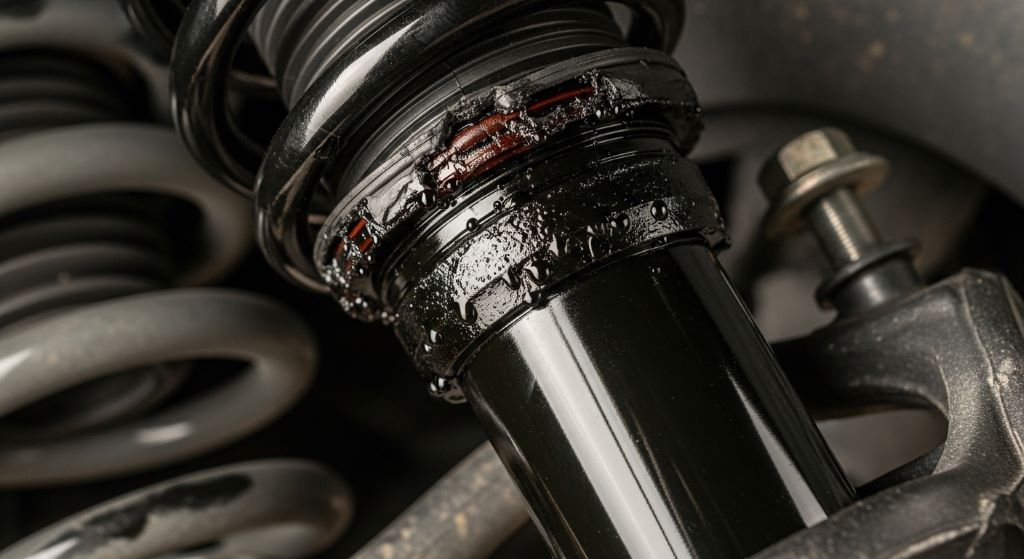
There are two types of oil loss you need to be aware of. External leaks are visible. You might see a greasy film or wet residue on the outside of the shock absorber body. These are easier to spot during a routine visual check.
Internal oil loss, on the other hand, happens inside the unit itself. The seals between different chambers can fail, allowing oil to move where it should not. This does not produce a visible leak. Instead, the shock absorber simply loses its damping ability from within. This type of failure is far more deceptive. Additionally, it is more dangerous because drivers often assume everything is fine since nothing looks wrong on the outside.
Understanding this distinction is the first step toward smarter vehicle inspection habits.
Early Warning Signs You Should Never Ignore
Your vehicle will usually tell you something is wrong before a professional inspection confirms it. The key is knowing what to listen and feel for. Here are the most common early warning signs of shock absorber oil loss:
- Excessive bouncing after going over a bump or pothole
- A nose-dive feeling when you brake suddenly
- The rear of the vehicle squatting noticeably during acceleration
- Uneven tyre wear, especially cupping or scalloping patterns
- A pulling or drifting sensation when cornering
- Longer stopping distances than usual
- Vibrations through the steering wheel at higher speeds
- A knocking or clunking sound over uneven road surfaces
Each of these symptoms on its own could point to several issues. However, when two or more appear together, shock absorber failure is a strong possibility.
How to Perform a Basic Visual Inspection at Home
You do not need to be a mechanic to do a basic check. In fact, a simple inspection takes only a few minutes. Start by parking your vehicle on a flat surface. Make sure the engine is off and the handbrake is on.
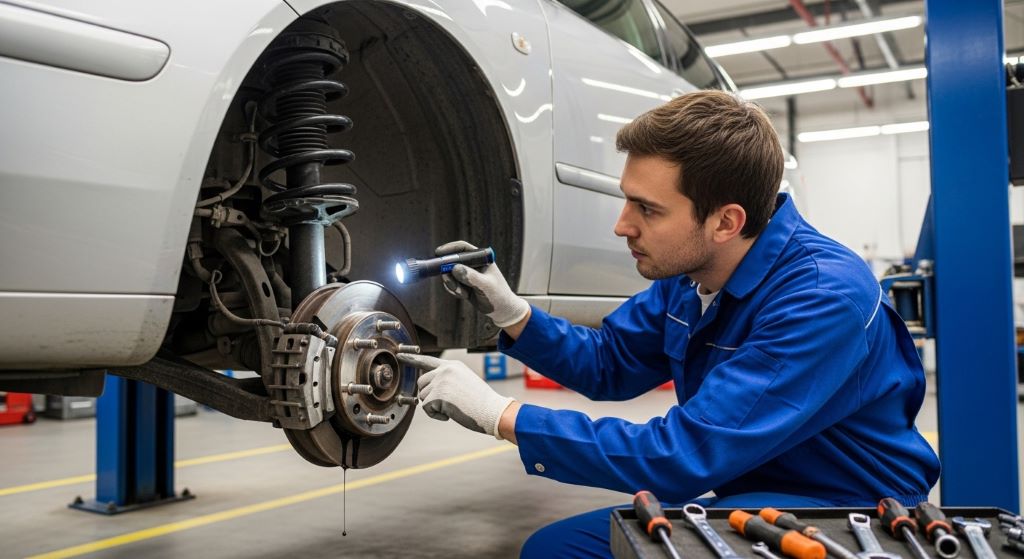
Look at the shock absorbers from the side. Use a torch if needed. Look for any signs of a greasy or oily coating on the outer body. A light dust covering is normal. However, a dark, wet, or streaky film is not. That residue suggests oil is seeping through a seal.
Next, try the bounce test. Press down firmly on one corner of the vehicle, then release. If the vehicle bounces more than once or twice before settling, the shock absorber in that corner may be losing its effectiveness.
Additionally, check the rubber bushings at the top and bottom of each shock absorber. Cracked or deteriorated bushings can allow moisture and dirt in, which accelerates seal wear and increases the risk of oil loss.
Using a Tyre Wear Pattern to Diagnose the Problem
Your tyres hold a surprising amount of information about your suspension health. When shock absorbers are working correctly, tyres wear evenly across their surface. When they fail, irregular wear patterns begin to appear.
Cupping, also called scalloping, is the most telling sign. This is when the tyre develops uneven dips or high spots around its circumference. It happens because a failing shock absorber allows the tyre to bounce on the road surface rather than staying in firm contact. Therefore, parts of the tyre wear faster than others.
If you see this pattern, do not just replace the tyres. Address the underlying suspension issue first. Otherwise, your new tyres will develop the same wear pattern very quickly.
When a Professional Inspection Becomes Necessary
Home inspections are a great starting point. However, they have limits. A qualified technician has access to tools and experience that make a much more accurate diagnosis possible. You should book a professional inspection if you notice any of the warning signs listed above, or if your vehicle has travelled more than 80,000 kilometres without a shock absorber service.
A mechanic will use a suspension analyser or a brake and suspension tester in some workshops. These machines apply a measured force to each wheel and measure how well the suspension responds. This can reveal internal oil loss that a visual check would completely miss.
Additionally, a technician can inspect the shock absorber mounting points, the top mounts, and the coil spring condition at the same time. Problems in these areas often accompany shock absorber wear.
How Weather and Road Conditions Accelerate Oil Loss
The environment your vehicle operates in plays a major role in how quickly shock absorbers degrade. Extreme heat causes the hydraulic oil inside to expand. Over time, this puts extra pressure on internal seals. Cold temperatures make the seals contract, which can also cause cracking and leakage.
Rough road conditions speed things up further. Potholes, speed bumps, gravel tracks, and corrugated dirt roads all force your shock absorbers to work much harder. Therefore, drivers in urban areas with poor road surfaces, or those who regularly drive on unsealed roads, should inspect their suspension more frequently than the standard recommendation.
Salt used on roads during winter can also corrode the outer body of the unit. While this does not directly cause oil loss, it weakens the casing and can eventually lead to seal failure.
The Cost of Ignoring the Problem
Delaying a shock absorber repair is rarely a cost-saving decision. When oil loss is left unaddressed, the rate of damage accelerates. The shock absorber eventually fails completely. By that point, the stress placed on surrounding components, including ball joints, tie rod ends, wheel bearings, and control arm bushings, may have caused secondary damage.
Replacing a single shock absorber is relatively affordable. Replacing multiple suspension components because wear has spread is significantly more expensive. Furthermore, a vehicle with severely worn shock absorbers is a genuine safety hazard. Braking distances increase, steering becomes imprecise, and the risk of losing control in an emergency rises considerably.
Conclusion
Detecting hidden shock absorber oil loss early is one of the best things you can do for your vehicle and your safety. The warning signs are often subtle at first. However, they become clear once you know what to look for. Start with a visual inspection and the basic bounce test. Pay close attention to your tyre wear patterns and how your vehicle handles during braking and cornering.
If something feels off, do not delay. A professional inspection will confirm whether oil loss is occurring, even when it is not visible to the naked eye. Addressing the problem early saves money, protects your tyres, and most importantly, keeps you safe on the road.
Regular attention to your suspension is not just good practice. It is responsible driving.
Frequently Asked Questions
How can I tell if my shock absorbers are leaking oil without going to a mechanic?
Look for a greasy or dark, oily film on the outer body of the shock absorber. Perform the bounce test by pressing down on each corner of the vehicle and releasing. If it bounces more than twice, there may be an oil loss issue. Also check your tyres for uneven, cupped wear patterns.
How long do shock absorbers typically last before oil loss becomes a concern?
Most shock absorbers last between 50,000 and 100,000 kilometres, depending on road conditions and driving habits. Vehicles driven frequently on rough or unpaved roads may need inspection sooner. Annual visual checks are a good preventive habit.
Is it safe to drive with a shock absorber that has lost oil?
It is not recommended. A shock absorber that has lost oil cannot properly dampen suspension movement. This leads to increased braking distances, reduced steering control, and greater risk of losing vehicle stability, especially in wet or emergency conditions.
Can both shock absorbers on the same axle fail at the same time?
Yes, this is actually quite common. Both units are exposed to the same road conditions and are usually the same age. Therefore, when one begins to fail, the other is often close behind. Most mechanics recommend replacing shock absorbers in pairs for this reason.
What is the difference between a leaking shock absorber and a blown one?
A leaking shock absorber is in the early stages of failure, where oil is escaping slowly through a damaged seal. A blown shock absorber has lost so much fluid that it offers almost no damping resistance at all. Both require attention, but a blown unit is a more immediate safety concern.
Related Topics:
How to Fix Your Car Camera: A Comprehensive Troubleshooting Guide
Car Jerks When Accelerating at Low Speeds – Causes & Fixes for Automatics