Car Shakes When Braking at High Speeds
Braking at high speeds converts far more motion energy into heat. Therefore, even tiny rotor flaws create strong vibration during those stops. However, the same flaw often feels invisible during slow neighborhood braking.
Speed multiplies both heat load and pulse frequency at each wheel. When a car shakes when braking only at speed, technicians suspect uneven rotors first. Also, suspension wear and wheel problems can amplify or mimic that shake.
First, this guide explains the physics behind high-speed brake vibration. Next, it maps each common cause onto energy and heat. Finally, it shows which warning signs demand immediate professional inspection.
Why Braking at High Speeds Creates Noticeable Vibration
Kinetic energy rises with the square of vehicle speed. Therefore, doubling speed creates roughly four times more energy. Consequently, brakes must shed that extra energy as heat quickly.
Meanwhile, faster wheels spin rotors through pads many more times. As a result, each rotor flaw pulses far more frequently. In addition, stronger pulses travel easily through steering and suspension parts.
Also, drivers feel front rotor problems mainly through steering wheels. In contrast, rear rotor problems often pulse through seats and pedals. Therefore, vibration location gives technicians useful early diagnostic clues. In practice, braking at high speeds magnifies every small rotor flaw.
Rotor Thickness Variation While Braking at High Speeds
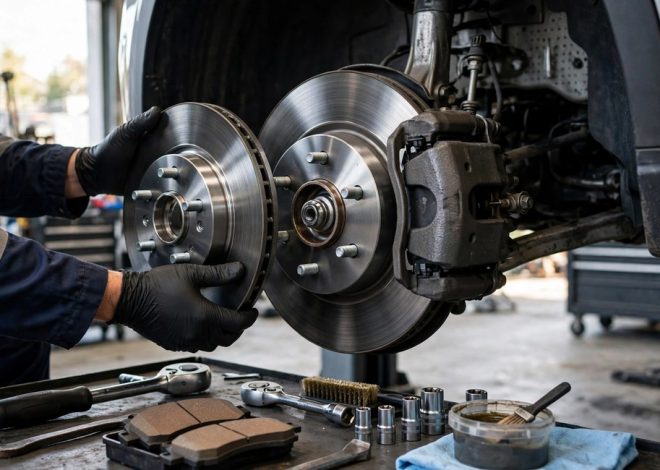
Rotor thickness variation means thickness differs slightly around the rotor face. However, drivers often call this condition a warped rotor incorrectly. For example, uneven wear and pad deposits usually create those differences.
As pads clamp down, thick spots push caliper pistons backward repeatedly. Then, thin spots let pistons move forward again between pushes. Therefore, hydraulic pressure fluctuates and drivers feel pedal pulsation clearly.
Lateral runout also worsens thickness variation over many miles. Specifically, a wobbling rotor scuffs pads lightly on high spots. Over time, that light contact wears some areas faster than others.
Also, drivers notice this problem first during highway exit braking. Then, vibration often fades as speed drops during the stop. That is why braking at high speeds turns minor wear into strong judder.
Brake Overheating While Braking at High Speeds
Heat builds fastest during long descents and repeated highway stops. However, rotors expand unevenly when heat spreads unevenly across them. As a result, existing thickness differences grow larger during hard braking.
Hot pads also transfer friction material onto rotors in patches. For example, holding hot pads against stopped rotors leaves deposits. Then, those patches grab pads harder than surrounding bare metal.
A sticking caliper also adds constant drag and extra heat. Similarly, seized slide pins prevent calipers from centering over rotors. Consequently, one pad wears faster and braking force becomes uneven.
- Sticking caliper: It drags one pad and overheats one rotor side.
- Glazed pads: Heat hardens pad surfaces and reduces smooth friction contact.
- Uneven deposits: They create patches that grip harder during each rotation.
Also, easy driving afterward helps hot brakes cool more evenly. Consequently, even cooling limits new deposits and thermal stress damage. Over long descents, braking at high speeds also builds serious rotor heat.
Suspension Components That Amplify Vibration
Healthy suspension parts hold wheels steady under strong braking forces. However, worn parts allow small movements that braking forces exploit. Therefore, minor rotor flaws can feel severe through loose components.
Several worn components commonly amplify an otherwise mild brake pulse. In addition, each worn part adds its own uncontrolled wheel movement.
- Worn bushings: They compress unevenly and let control arms shift under braking.
- Loose ball joints: Also, they allow knuckles to move slightly during hard stops.
- Worn tie rod ends: Meanwhile, play in these ends turns pulses into shake.
- Weak struts: Finally, weak damping reduces tire contact and increases nose dive.
Meanwhile, braking shifts vehicle weight forward onto front wheels. As a result, front suspension wear shows most during highway stops.
Technicians therefore shake wheels and inspect joints during brake diagnosis. Then, they separate amplifier faults from original rotor faults clearly. Simply put, braking at high speeds demands even friction at every wheel.
Wheel and Tire Problems That Mimic Brake Vibration
Wheel and tire faults can closely imitate genuine brake vibration. However, timing usually separates these faults from true rotor problems. For example, imbalance often shakes the car without any braking.
Also, bent rims and damaged tires vibrate across many speeds. In contrast, rotor vibration appears mainly when drivers apply brakes. Next, loose wheel bearings add wobble that worsens under braking loads.
Uneven lug tightening also distorts rotors and creates later pulsation. Therefore, technicians tighten lug nuts in a star pattern correctly. Also, they follow the manufacturer specification for final tightening torque.
Similarly, worn bearings hum and wobble beyond braking moments alone. However, a careful road test separates bearing wobble from pulsation.
When Braking at High Speeds Requires Immediate Inspection
Some high-speed vibration signals fading control and lengthening stopping distances. Therefore, drivers should treat sudden changes as urgent safety warnings.
First, book immediate inspection when vibration appears suddenly at speed. Also, seek help when braking performance changes alongside the shake.
- Rapidly worsening shake: It suggests fast component failure and reduced control.
- Pulling during braking: It points toward uneven braking force between wheels.
- Grinding or scraping noises: They signal severely worn pads damaging rotor surfaces.
- Soft pedal feel: It indicates hydraulic problems needing urgent professional attention.
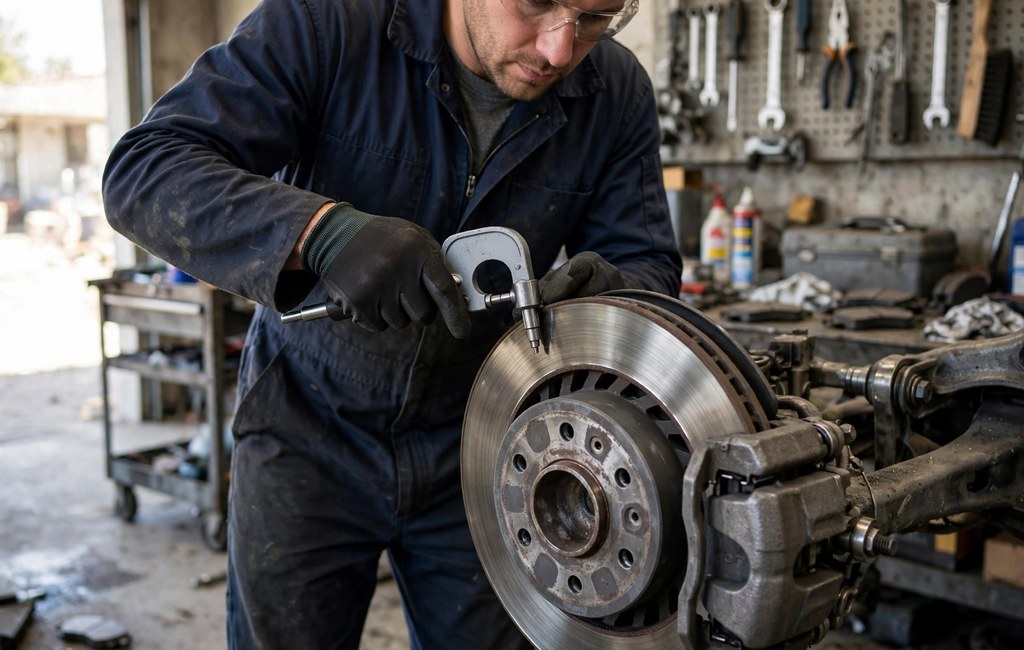
Technicians measure rotor thickness at several points around each rotor. Next, they compare measurements against the minimum stamped on rotors. Finally, resurfacing helps only when thickness stays above that minimum.
Frequently Asked Questions
Why does my car shake only when braking at high speed?
High speed adds energy and pulse frequency, so small rotor flaws feel strong.
Why does my car shake when braking at 60 mph but not slower?
At lower speeds, the same thickness variation produces pulses too weak to notice.
Can warped rotors cause vibration at highway speeds?
Most cases involve thickness variation or pad deposits rather than true warping.
Can tires cause shaking that feels like brake vibration?
Yes, imbalance, bent rims, and tire damage can mimic brake vibration closely.
Is it safe to drive with high-speed brake vibration?
Drivers should arrange prompt inspection because vibration can signal reduced braking control.
Conclusion
In short, high-speed braking turns small flaws into strong vibration. Heat, thickness variation, and worn parts usually combine behind the shake.
Do not ignore vibration that appears during highway braking stops. Instead, book a brake inspection today and restore confident stopping.