How Bad Brake Rotors Cause Vibration
First, uneven brake rotors cause vibration because pads grip thick spots harder than thin spots. Therefore, each brake application sends uneven pulses through the pedal and steering wheel.
Next, imagine one stop in slow motion as the rotor spins between both pads. For example, drivers trace a car shakes when braking complaint to this uneven grip. Then the pads squeeze, release slightly, and squeeze again during every rotation.
Also, heat and uneven pad deposits gradually change the rotor surface over time. As a result, a smooth stop slowly turns into a rhythmic shake. Finally, this guide separates thickness variation from runout and explains both clearly.
What Happens When Brake Rotors Cause Vibration
First, press the pedal and hydraulic pressure pushes both pads toward the rotor. Next, friction slows the rotor and converts forward motion into heat. Then the pads should maintain steady contact across the entire rotor face.
However, high spots interrupt that steady contact during every wheel rotation. For example, a thick section pushes the pads and caliper piston backward briefly. As a result, braking force rises and falls instead of staying smooth.
Also, repeated hard stops heat the rotor and pads intensely. Then holding hot pads against the rotor deposits pad material unevenly. As a result, those deposits create high spots and worsen uneven contact. In most cases, brake rotors cause vibration before any other part wears out.
How Thickness Variation Makes Brake Rotors Cause Vibration
Also, mechanics call this unevenness disc thickness variation across the rotor circumference. It means one section measures thicker than another section nearby. Even tiny differences change how firmly pads clamp the rotor.
Therefore, thick spots create stronger grip and stronger braking force. Meanwhile, thin spots create weaker grip and allow brief pad release. As a result, the caliper piston moves inward and outward repeatedly.
First, the piston pushes back when a thick spot passes between pads. Next, hydraulic fluid carries that push toward the brake pedal. Therefore, your foot feels a pulse that matches wheel rotation speed. That is why brake rotors cause vibration during nearly every firm stop.
What Rotor Runout Means
In contrast, runout describes side-to-side wobble as the rotor spins. Thickness variation concerns rotor thickness itself, not rotor position during rotation. However, both problems disturb pad contact and produce similar vibration. Also, drivers rarely see runout because the wobble measures extremely small.
First, rust or debris on the hub face often tilts the rotor slightly. Also, uneven lug nut tightening can distort the rotor hat during installation. Therefore, mechanics tighten lug nuts to specification in a star pattern.
Meanwhile, a wobbling rotor brushes the pads lightly between brake applications. Then that light contact wears some sections thinner than others. As a result, runout gradually creates thickness variation and stronger pulsation. Over time, brake rotors cause vibration through thickness differences around the disc.
Signs That Brake Rotors Cause Vibration
First, drivers usually notice rotor problems through feel before they see visible damage. For example, front rotor problems often shake the steering wheel during braking. In contrast, rear rotor problems often send vibration through the seat.
- Pedal pulsation: It pushes back rhythmically against your foot during stops. Also, the pulse speeds and slows with wheel rotation.
- Steering shake: The wheel shimmies side to side during braking. Therefore, drivers often suspect front rotors first.
- Braking noise: Rotors with grooves or hard spots create rhythmic squeals or growls. However, noise alone does not confirm rotor damage.
- Visible damage: Mechanics spot grooves, cracks, scoring, and dark heat spots visually. Also, uneven pad wear strengthens the suspicion of uneven contact.
Also, timing gives drivers a useful clue about the likely source. For example, vibration only during braking points strongly toward rotor unevenness. In contrast, vibration during coasting suggests tires, wheels, or bearings instead. Simply put, brake rotors cause vibration whenever pads meet uneven friction.
How Mechanics Measure Rotor Thickness and Runout
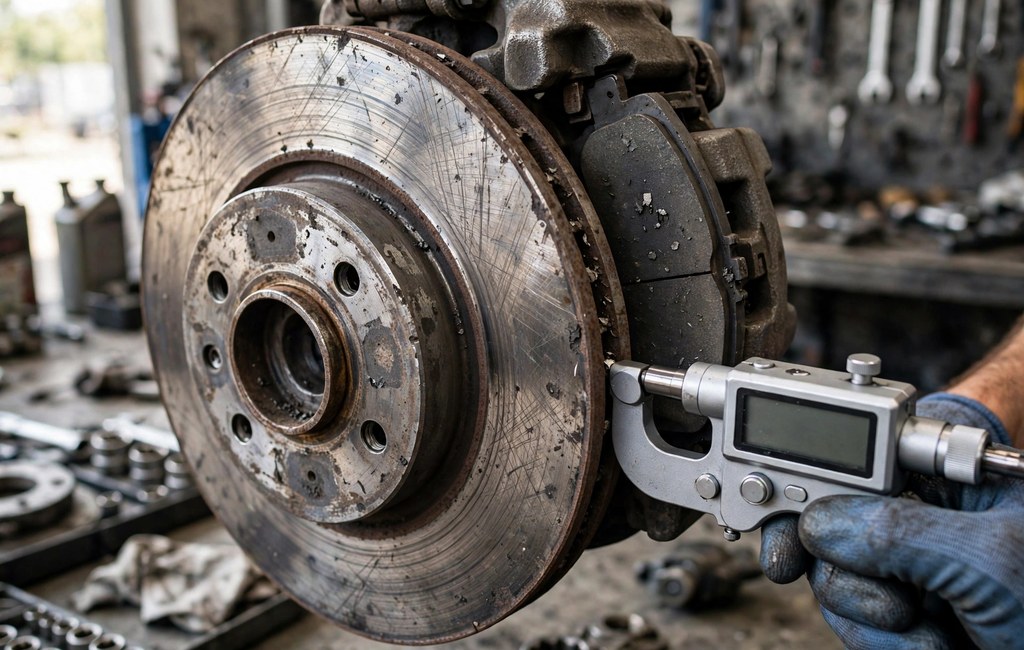
However, visual checks suggest trouble, but precise measurements confirm the actual problem. Therefore, mechanics measure both thickness variation and lateral runout carefully. Also, both tools reveal problems that eyes alone cannot measure reliably.
Measuring Thickness With a Micrometer
First, the mechanic clamps a brake micrometer onto the rotor friction surface. Next, the mechanic records thickness at multiple points around the rotor. Then the mechanic compares the lowest reading with the stamped minimum thickness. Finally, the spread between readings reveals the amount of thickness variation.
Measuring Runout With a Dial Indicator
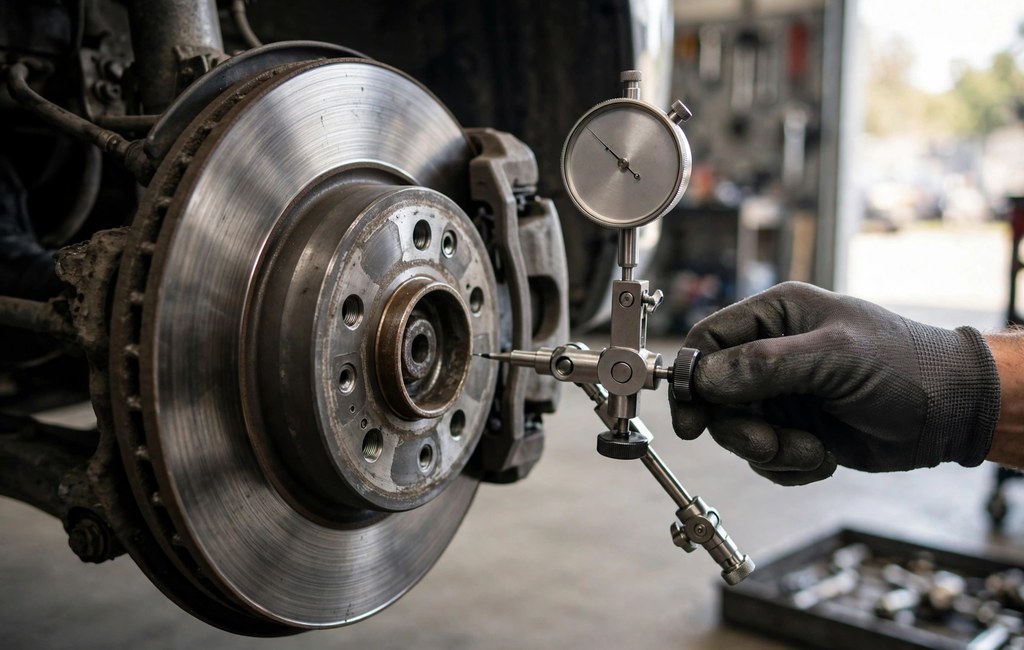
First, the mechanic mounts a dial indicator against a fixed suspension point. Next, the mechanic positions the indicator tip squarely against the rotor face. Then the mechanic rotates the rotor slowly through one full turn. Finally, the highest and lowest readings show total lateral runout.
When Brake Rotors Cause Vibration Beyond Repair
Resurfacing removes a thin layer and restores a flat, even friction surface. However, mechanics only resurface rotors with enough thickness remaining afterward. Therefore, the finished rotor must stay above its stamped minimum thickness. Similarly, thin rotors dissipate heat poorly and risk cracking under stress.
In contrast, cracks, deep grooves, or severe heat damage require replacement. Also, rotors at or below minimum thickness require replacement for safety. Finally, fresh pads help new or resurfaced rotors maintain even contact.
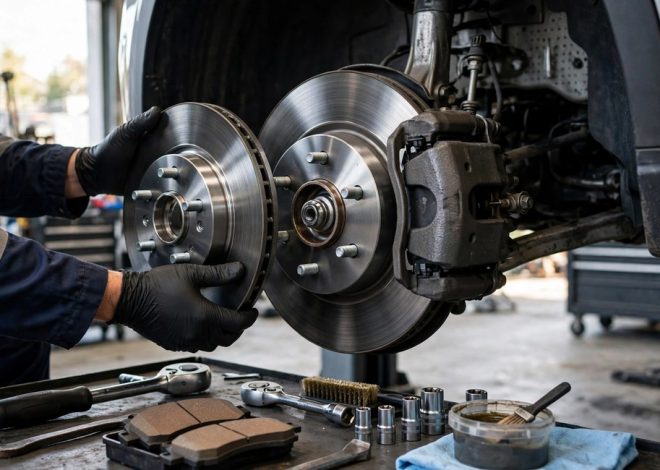
Also, mechanics clean the hub face before installing any rotor. Then they tighten lug nuts evenly to the manufacturer specification. Finally, they recheck runout after installation and confirm smooth braking performance.
Frequently Asked Questions
Can bad brake rotors cause shaking only when braking?
Yes, uneven rotors usually vibrate only when pads clamp the spinning rotor.
What is the difference between thickness variation and runout?
In contrast, thickness variation changes thickness while runout creates sideways wobble.
Do brake rotors cause vibration until replacement?
No, mechanics resurface suitable rotors and replace only rotors below minimum thickness.
How do mechanics check brake rotor thickness?
First, mechanics clamp a brake micrometer at multiple points around the rotor.
Can rotor vibration damage other brake parts?
Also, continued vibration accelerates uneven pad wear and stresses caliper components.
Conclusion
Uneven rotors turn every stop into a series of uneven grips and releases. Therefore, thickness variation and runout explain most rotor-related braking vibration. Also, early measurement separates simple resurfacing cases from true replacement cases.
Do not ignore a pulsing pedal or shaking steering wheel during braking. Instead, book a brake inspection promptly and request thickness and runout measurements. Then a mechanic can confirm the cause and restore smooth, confident stopping.