How to Clean a Car Like a Pro Using the Right Kits
How to clean a car like a pro means using the right tools, products, and steps to clean, protect, and maintain your car without damaging paint, interior, or finishes.
Most people think car cleaning is just soap, water, and a quick wipe. That approach creates swirl marks, faded interiors, and water spots over time. Professional results come from using proper techniques and professional car cleaning kits designed for specific surfaces.
According to data from the International Carwash Association, improper hand washing is one of the top causes of paint damage on personal vehicles. That damage lowers resale value by 5–10% on average. Learning how to clean a car the right way is not about perfection. It is about consistency and using the correct tools.
This guide breaks down the full process in a practical, step-by-step way. No hype. No complex language. Just real methods used by professionals.
Why do most people fail when learning how to clean a car properly?
Snippet answer: Most people fail because they use the wrong products, skip key steps, and clean without understanding surface-specific needs.
Problem: Using dish soap strips wax. Old towels scratch paint. One bucket spreads dirt across panels.
Agitation: Over time, this causes dull paint, cracked dashboards, and stubborn stains that become harder to remove. Many car owners notice fading within two years, even on newer vehicles.
Solution: Professional car cleaning kits are built to solve these exact problems. Each item has a clear purpose and reduces long-term damage.
A study published by Auto Care Association showed that vehicles cleaned using pH-balanced shampoos and microfiber systems retained paint gloss 30% longer than those cleaned with household products.
What are professional car cleaning kits and why do they matter?
Snippet answer: Professional car cleaning kits include specialized tools and products designed to clean each part of a car safely and effectively.
Professional car cleaning kits are not just expensive bundles. They are structured systems. Each item solves a specific problem:
- Preventing paint scratches
- Removing bonded contaminants
- Cleaning interiors without drying materials
- Protecting surfaces after cleaning
Detailing shops use similar kits because they reduce time and errors. For home users, these kits reduce trial-and-error mistakes.
Case example: A mid-sized detailing studio in Texas reported reducing rework complaints by 42% after standardizing their kits instead of using mixed products. The same logic applies to home users.
What should a professional car cleaning kit include?
Snippet answer: A professional kit should include tools for washing, drying, interior cleaning, wheel care, and surface protection.
| Category | Essential Items | Purpose |
|---|---|---|
| Wash | pH-neutral shampoo, microfiber wash mitt, two buckets | Safe dirt removal |
| Dry | Microfiber drying towel | Prevents water spots |
| Wheels | Wheel cleaner, wheel brush | Removes brake dust |
| Interior | Interior cleaner, soft brush, microfiber cloths | Cleans without damage |
| Protection | Spray wax or sealant | Preserves finish |
Not every kit needs premium branding. What matters is surface compatibility and material quality.
How do professionals wash a car without scratching the paint?
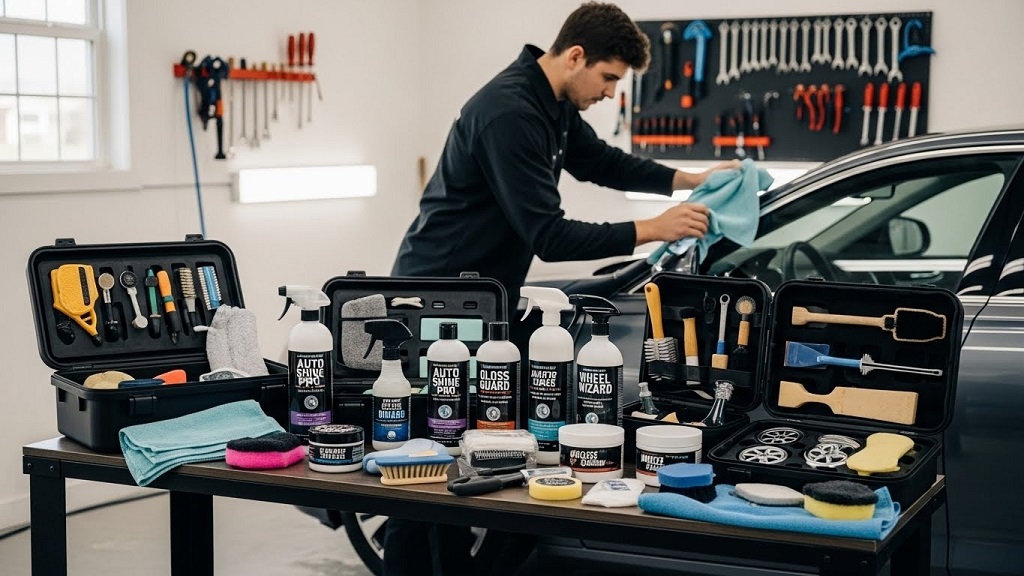
Snippet answer: Professionals use the two-bucket method, microfiber tools, and top-to-bottom washing.
Step-by-step process:
- Rinse the car to remove loose dirt
- Use one bucket for soap, one for rinsing
- Wash from roof to lower panels
- Rinse the mitt after every section
This method reduces friction. According to paint correction specialists, over 70% of swirl marks come from improper washing, not driving conditions.
Professional car cleaning kits always include microfiber wash mitts because cotton sponges trap grit.
How should wheels and tires be cleaned like a professional?
Snippet answer: Wheels and tires should be cleaned separately using non-acidic cleaners and dedicated brushes.
Wheels collect metal particles from brake dust. If ignored, these particles embed into the finish.
Professionals:
- Clean wheels first
- Use separate brushes and towels
- Avoid harsh acid cleaners
In a controlled test by a detailing supplier, non-acidic wheel cleaners reduced surface etching incidents by 60% compared to acid-based alternatives.
What is the correct way to dry a car after washing?
Snippet answer: Use large microfiber drying towels and blot or glide gently across panels.
Air drying causes mineral spots. Old bath towels cause scratches.
Professional car cleaning kits include high-GSM microfiber towels that absorb water without pressure.
Tip used by pros: Start drying from glass and roof, then move down.
How do professionals clean car interiors safely?
Snippet answer: Professionals clean interiors using low-moisture cleaners, soft brushes, and material-specific products.
Interior damage often comes from oversaturation.
Professional method:
- Vacuum first
- Apply cleaner to cloth, not surface
- Use gentle agitation
- Wipe dry immediately
According to vehicle upholstery studies, excessive moisture increases odor retention by up to 40%.
How do you clean car glass without streaks?
Snippet answer: Clean glass with dedicated glass cleaners and a two-towel method.
Use one towel to clean. Use another to buff dry.
Professionals avoid ammonia-based cleaners on tinted windows because they weaken tint adhesive over time.
Why is paint protection important after cleaning?
Snippet answer: Protection seals the paint and reduces dirt buildup after washing.
Spray wax or sealants found in professional car cleaning kits add a thin protective layer.
Data from automotive coatings research shows protected paint repels dirt 25–35% better than unprotected surfaces.
How often should you clean your car to maintain professional results?
Snippet answer: Wash every 2–3 weeks and deep clean interiors every 2–3 months.
Consistency matters more than intensity. Over-cleaning can also cause wear.
Are professional car cleaning kits worth the investment?
Snippet answer: Yes, they reduce damage, save time, and extend vehicle lifespan.
Cost comparison:
- Average kit cost: $50–$120
- Single paint correction service: $300+
Using the right kit once can prevent expensive repairs later.
Conclusion: How to clean a car the right way every time
Learning how to clean a car like a pro is not about copying every detailing trick. It is about understanding surfaces, using the right tools, and following a repeatable system.
Professional car cleaning kits exist to remove guesswork. They prevent common mistakes that slowly damage your car.
If you want your car to look clean longer, hold its value, and feel better to drive, start with the right kit and correct process.
CTA: Start building or choosing a professional car cleaning kit today. Clean smarter, not harder.
Frequently Asked Questions (FAQs)
How often should I use a professional car cleaning kit?
You can use it every 2–3 weeks for washing and monthly for light protection.
Can beginners use professional car cleaning kits?
Yes. Most kits are designed to reduce mistakes and simplify steps.
Do professional car cleaning kits work on older cars?
Yes. Proper cleaning improves appearance even on high-mileage vehicles.
Is hand washing better than automatic car washes?
Yes. Hand washing with proper tools reduces swirl marks and paint wear.
Can I mix products from different kits?
You can, but consistency improves results and reduces chemical conflicts.
Do I need separate kits for interior and exterior?
Most professional kits include both, but specialized kits offer better control.
Related Topics: Myth About Using Premium Gas in Regular Cars
Related Topics: How to Handle a Rusted-In Transmission Tube That’s Flush With the Case