Auto Repair Financing When Savings Are Not Enough
Car trouble always seems to strike at the worst possible time. Your engine starts making strange noises, your transmission fails, or your brakes need immediate attention. However, when you check your bank account, the reality sets in: you don’t have enough saved to cover the repair costs.
This situation affects millions of drivers every year. According to recent data, unexpected car repairs can cost anywhere from a few hundred to several thousand dollars. Therefore, understanding your financing options becomes essential when your savings fall short.
Understanding the True Cost of Car Repairs
Most vehicle owners underestimate how expensive repairs can become. A simple brake job might cost $300, while transmission repairs can easily exceed $3,000. Additionally, older vehicles often need multiple repairs simultaneously, compounding the financial burden.
The average American drives approximately 14,000 miles annually. This regular use means wear and tear is inevitable. Consequently, even well-maintained vehicles will eventually require significant repairs. Planning ahead helps, but sometimes emergencies happen before you’ve built adequate savings.
Why Traditional Savings May Not Be Enough
Building an emergency fund takes time and discipline. Financial experts typically recommend saving three to six months of expenses. However, many households live paycheck to paycheck, making this goal difficult to achieve.
Even those with emergency funds face challenges. Your savings might be earmarked for other emergencies like medical bills or home repairs. Moreover, depleting your entire emergency fund for car repairs leaves you vulnerable to other unexpected expenses. Therefore, exploring financing options makes practical sense for many situations.
Common Auto Repair Financing Options
Mechanic Shop Payment Plans
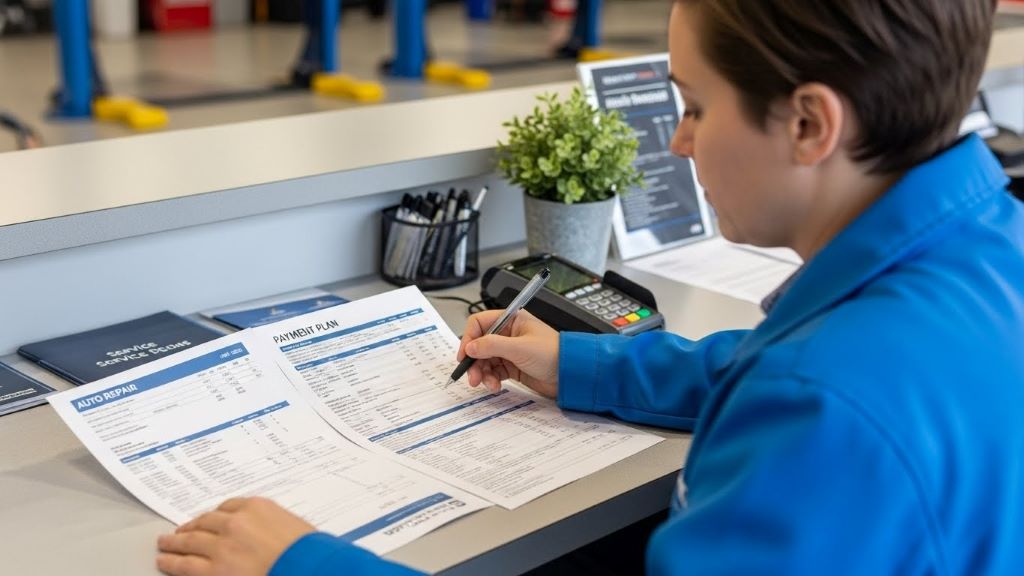
Many auto repair shops now offer in-house payment plans. These arrangements let you pay for repairs over several months. Typically, shops partner with financing companies to provide this service. The approval process is usually quick, often taking just minutes.
Interest rates vary widely depending on your credit score. Some shops offer zero-percent financing for qualified customers. However, read the terms carefully before signing. Late payments can result in penalties or increased interest rates.
Credit Cards for Auto Repairs
Credit cards provide immediate access to funds for urgent repairs. If you have available credit, you can get your car fixed right away. Additionally, some credit cards offer rewards points or cashback on purchases.
The downside involves high interest rates if you carry a balance. Credit card APRs often exceed 20 percent annually. Therefore, this option works best if you can pay off the balance quickly. Otherwise, you might end up paying significantly more than the original repair cost.
Personal Loans from Banks and Credit Unions
Personal loans offer another viable financing option. Banks and credit unions provide loans specifically for auto repairs. These loans typically feature fixed interest rates and predictable monthly payments.
Credit unions often provide more favorable terms than traditional banks. As member-owned institutions, they typically charge lower interest rates. Furthermore, credit unions may be more flexible with approval criteria. However, you must be a member to access their loan products.
Buy Now, Pay Later Services
Several fintech companies now offer buy now, pay later options for auto repairs. These services let you split the cost into interest-free installments. Companies like Affirm and PayPal Credit partner with repair shops nationwide.
The application process is straightforward and entirely digital. Approval happens almost instantly in most cases. Nevertheless, missing payments can damage your credit score and result in fees. Additionally, not all repair shops accept these payment methods yet.
Title Loans and Their Risks
Title loans use your vehicle as collateral for short-term financing. While they provide quick access to cash, they come with significant risks. Interest rates can be extremely high, sometimes exceeding 300 percent APR.
If you cannot repay the loan, the lender can repossess your vehicle. This creates a dangerous cycle where you might lose your car while still owing money. Therefore, financial experts strongly discourage title loans except as an absolute last resort.
How to Choose the Right Financing Option
Selecting the best financing method depends on several factors. First, consider the total repair cost and how quickly you need the work completed. Emergency repairs require immediate solutions, while routine maintenance allows more time to explore options.
Your credit score plays a crucial role in available options. Higher credit scores unlock lower interest rates and better terms. Conversely, poor credit limits your choices and increases borrowing costs. However, some lenders specialize in working with borrowers who have challenged credit histories.
Compare the total cost of borrowing across different options. Look beyond monthly payments to understand the complete financial picture. Calculate how much interest you will pay over the loan’s lifetime. Additionally, check for hidden fees like origination charges or prepayment penalties.
According to Consumer Reports, thoroughly researching financing options can save hundreds of dollars in interest charges. Taking time to compare offers ensures you make an informed decision.
Improving Your Chances of Approval
Lenders evaluate several factors when reviewing financing applications. Your credit score tops the list, but income stability also matters greatly. Demonstrating steady employment increases your approval odds significantly.
Reduce your debt-to-income ratio before applying if possible. Paying down existing debts shows lenders you can manage additional payments. Furthermore, correct any errors on your credit report that might lower your score unfairly.
Consider applying with a co-signer if your credit needs improvement. A co-signer with good credit strengthens your application. However, remember that co-signers assume responsibility if you default on payments. This arrangement requires trust and clear communication between both parties.
Alternative Solutions to Consider
Negotiating with Your Mechanic
Many repair shops are willing to negotiate on price or payment terms. Ask if they offer discounts for cash payments or flexible scheduling. Some mechanics reduce labor costs if you provide your own parts.
Building a relationship with a trusted mechanic pays dividends over time. Regular customers often receive preferential treatment and better pricing. Additionally, honest mechanics will prioritize necessary repairs over optional ones, helping you manage costs effectively.
Seeking Help from Community Resources
Some communities offer assistance programs for transportation emergencies. Nonprofit organizations and churches sometimes provide grants or low-interest loans. These programs typically serve low-income families who need vehicles for work.
Government assistance programs might help in certain situations as well. Contact your local social services department to learn about available resources. While not everyone qualifies, these programs provide valuable support for those who do.
Preventive Maintenance to Avoid Future Costs
Investing in regular maintenance prevents many expensive repairs. Oil changes, tire rotations, and fluid checks cost relatively little. However, neglecting these services leads to major problems down the road.
Keep detailed records of all maintenance and repairs. This documentation helps you anticipate future needs and budget accordingly. Moreover, well-maintained vehicles retain higher resale values, benefiting you if you decide to sell.
The Federal Trade Commission recommends following manufacturer maintenance schedules to extend vehicle lifespan and prevent costly breakdowns.
Building Financial Resilience for Future Repairs
Start setting aside money specifically for car maintenance and repairs. Even small amounts add up over time. Automate transfers to a dedicated savings account to build this fund consistently.
Consider the age and condition of your vehicle when planning. Older cars typically require more frequent repairs. Therefore, increase your monthly savings as your vehicle ages. This proactive approach reduces stress when problems inevitably arise.
Insurance products like mechanical breakdown coverage offer another layer of protection. These policies cover major component failures after your manufacturer warranty expires. While they involve additional monthly costs, they provide peace of mind and financial protection.
Conclusion
Auto repair financing provides essential support when savings fall short. Multiple options exist, from mechanic payment plans to personal loans and credit cards. Each solution offers distinct advantages and drawbacks depending on your situation.
Carefully evaluate interest rates, repayment terms, and total costs before committing. Additionally, consider your credit score and financial stability when selecting a financing method. Remember that avoiding predatory lending practices like title loans protects your financial wellbeing.
Building an emergency fund remains the best long-term strategy. However, when unexpected repairs arise before you’re financially prepared, responsible financing bridges the gap. Taking action quickly prevents small problems from becoming catastrophic failures while maintaining your transportation needs.
Frequently Asked Questions
What credit score do I need for auto repair financing?
Most financing options require a minimum credit score between 580 and 620. However, some lenders work with lower scores, though interest rates will be higher. Credit unions and buy now, pay later services sometimes have more flexible requirements than traditional banks.
Can I finance auto repairs with bad credit?
Yes, several options exist for borrowers with challenged credit. Mechanic shop financing programs, certain credit cards designed for rebuilding credit, and credit union loans may approve applicants with lower scores. Expect higher interest rates and potentially smaller loan amounts than those with good credit receive.
How long do auto repair loans typically last?
Repayment terms vary based on the loan amount and lender. Small repairs might be financed over 6 to 12 months, while major repairs could extend to 24 or 36 months. Shorter terms mean higher monthly payments but less total interest paid over the loan’s lifetime.
Should I use my credit card or get a personal loan for car repairs?
This depends on the repair cost and your ability to repay quickly. For smaller repairs you can pay off within a few months, credit cards work well, especially if you earn rewards. For larger repairs requiring extended repayment, personal loans typically offer lower interest rates than credit cards.
Are there any grants or assistance programs for car repairs?
Some nonprofit organizations, community action agencies, and charitable foundations offer limited assistance for transportation emergencies. Eligibility typically requires demonstrating financial need and that the vehicle is essential for employment. Contact local social services departments or 211 helplines to learn about programs in your area.
Related Topics:
Top Tricks for Successful Vehicle Financing: A Buyer’s Guide
Wheels of Wisdom: Expert Vehicle Financing Advice for Buyers