Coleman Mini Bike Performance Kit: Stage 1 vs Stage 2 Explained
The Coleman CT200U comes from the factory as a reliable, approachable trail bike. It’s tuned that way on purpose. The carburetor is running a conservative fuel mix, the exhaust is quiet, and the air filter flows just enough to keep things calm and manageable for new riders.
That’s fine for a while. But at some point most owners start wondering what this 196cc engine is actually capable of with a bit more breathing room.
That’s where performance kits come in. They bundle the most impactful bolt-on upgrades into one package so you’re not hunting for individual parts, and they’re specifically tuned to work together rather than mixing and matching random components.
Here’s what the Stage 1 and Stage 2 kits actually are, what’s in each one, and which is worth your money based on where you’re at with your build.
What Models Are Compatible?
Before getting into the kits themselves, it’s worth confirming compatibility. The Coleman Performance Kit is designed for the entire Coleman minibike series. That includes:
- Coleman CT200U
- Coleman CT200U-A
- Coleman CT200U-EX
- Coleman BT200X
- Coleman RB200
- Coleman RT200
If you have any of these, the Stage 1 kit is a direct fit. No cutting, no fabricating, no guess work.
Stage 1 Performance Kit: What You Get
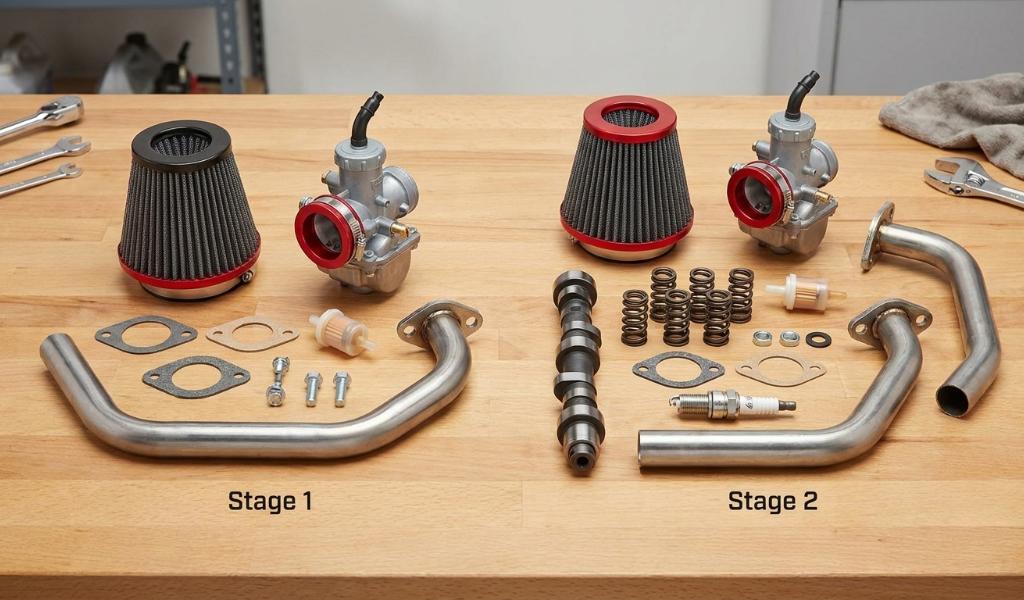
The Stage 1 kit is a collection of bolt-on external upgrades. Nothing here requires opening the engine. You’re working on the intake, carburetion, and exhaust system only.
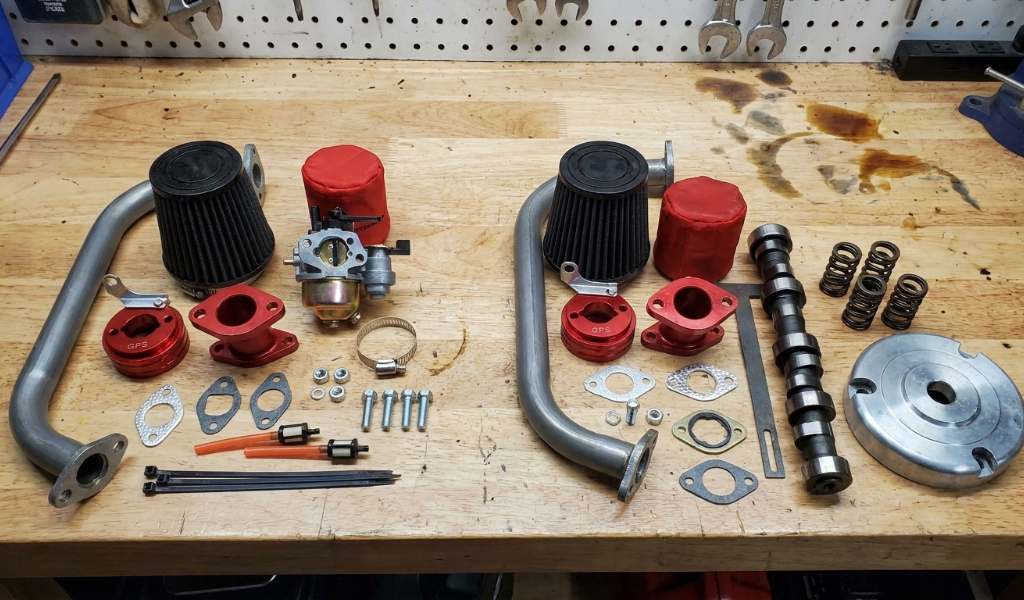
A Stage 1 Coleman Performance Kit typically includes:
Coleman Header Pipe. The stock exhaust system on the CT200U is restrictive by design. The header pipe in the Stage 1 kit improves exhaust flow out of the engine, which reduces backpressure and lets the engine breathe out more freely. You’ll notice the sound changes too. It takes on a deeper, more aggressive tone without being obnoxiously loud.
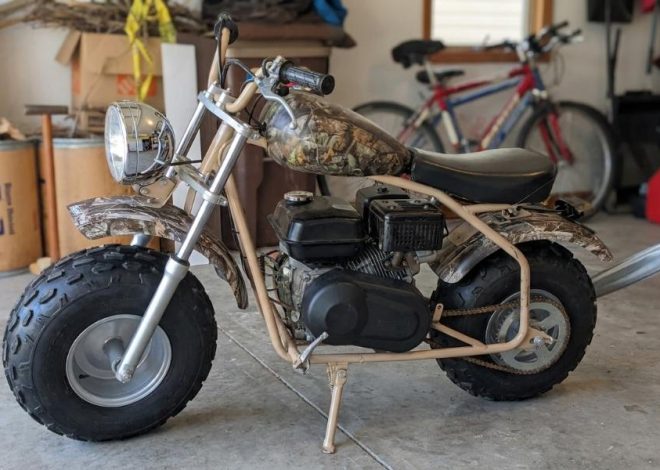
Performance Muffler. Paired with the header pipe, the muffler in the Stage 1 kit is tuned for better flow than the stock unit while still keeping noise at a reasonable level. Some kits include an RLV muffler, which is well regarded in the Coleman Camo mini bike community for adding solid low-end and mid-range grunt.
Stage 1 Carburetor with .038 Main Jet. This is the biggest piece of the kit. The stock carburetor on Coleman 200-series bikes runs a lean, conservative fuel-air mix. The Stage 1 carb comes pre-jetted with a .038 main jet, which delivers more fuel to match the increased airflow the new exhaust allows.
High-Flow Air Filter. More fuel and better exhaust means the engine needs more air coming in too. The K&N-style high-flow filter in the Stage 1 kit flows significantly better than the stock unit while still filtering debris.
Carb Gasket Kit and Vent Filter Kit. Smaller but important. Fresh gaskets ensure a proper seal at the carb mount so you’re not losing power to air leaks. The vent filter protects the engine breather.
Expected power gain: Stage 1 kits on the 196cc platform are generally credited with adding around 2 to 3 horsepower on top of the stock 6.5 HP rating. That takes you into the 8 to 9 HP territory, which is a noticeable difference on a bike this light.
Stage 2 Performance Kit: What You Get
Stage 2 is a different animal. Where Stage 1 is all external and bolt-on, Stage 2 involves going inside the engine. This is for riders who have already done Stage 1 and want to push things further, or who are building a dedicated performance machine from the start.
A Stage 2 kit typically includes internal engine upgrades:
Billet Flywheel. The stock flywheel is cast iron and heavy. A billet aluminum flywheel is significantly lighter, which allows the engine to rev up and down much faster. This improves throttle response noticeably, especially coming out of low-speed corners or off-trail obstacles.
Billet Connecting Rod. The stock connecting rod in the 196cc engine is cast, not forged. At higher RPMs, a cast rod is a potential weak point. A billet rod handles the additional stress of running the engine harder and faster without the governor limiting it.
Performance Camshaft. The cam controls when the intake and exhaust valves open and close. A performance cam increases the duration and lift compared to stock, which means more air and fuel gets into the combustion chamber and more exhaust exits on each cycle. This is where meaningful top-end power comes from.
Dual Valve Spring Set. Higher-rate valve springs keep up with the more aggressive cam profile. The stock springs are fine for stock RPMs but can float at the higher RPMs a Stage 2 build produces. Stronger springs prevent that.
Spark Plug and Gaskets. Fresh sealing hardware and an appropriate plug for the higher-output configuration.
Expected power gain: Combined with a Stage 1 kit and governor removal, a Stage 2 build on the 196cc engine can push into the 12 to 15 HP range depending on how far the build goes. That’s roughly double the stock output.
Stage 1 vs Stage 2: Which One Should You Get?
Here’s a simple way to think about it:
Get Stage 1 if you want a clear performance improvement over stock without doing engine surgery. It’s affordable, beginner-installable, and produces a noticeable difference in pull and throttle response. For most riders, Stage 1 combined with governor removal is already a very satisfying outcome.
Get Stage 2 if you’ve already done Stage 1 and you want more, or if you’re building a dedicated performance bike from day one and want to go all the way. Stage 2 without Stage 1 in place is not the right order of operations. The external flow improvements from Stage 1 need to be there to support what the internal Stage 2 upgrades are doing.
| Stage 1 | Stage 2 | |
| What it touches | Carb, exhaust, intake | Internals: flywheel, rod, cam, springs |
| HP gain estimate | +2 to 3 HP | Additional +4 to 6 HP on top of Stage 1 |
| Installation difficulty | Beginner | Intermediate to advanced |
| Engine disassembly needed | No | Yes |
| Typical cost | $80 to $120 | $150 to $250 additional |
| Do Stage 1 first? | No (starting point) | Yes, always |
One Thing to Keep in Mind
Neither stage of performance kit is designed for a bone-stock engine that still has the governor in place. The governor caps RPMs at around 3,600, which means the carb and exhaust improvements from Stage 1 can’t fully express themselves. Most riders remove the governor first or at the same time as installing Stage 1. The combination is what produces the results you’ll read about in community forums.
Where to Buy
GoPowerSports is the most well-known vendor for these kits and sells Coleman-specific versions. Amazon carries various Stage 1 carb-and-exhaust combos as well, though the quality varies between sellers. Sticking with a known vendor that lists specific Coleman 200 compatibility is the safest bet.