Mini Car Lift for Garage: Compact Lifting Options for Home Mechanics
A mini car lift for garage use raises most vehicles about 26 to 48 inches. Moreover, these compact lifts fit tight single bays and low ceilings without permanent installation. Therefore, home mechanics gain safer, steadier access than floor jacks provide alone. Specifically, scissor, tilt, and small frame lifts dominate this practical compact category.
Additionally, these lifts handle tire rotations, brake service, and detailing work extremely well. However, their modest height still restricts deep underbody access during major repairs. Before choosing, review this car lift for garage for full context. Finally, you should match lift height and capacity to regular jobs.
What Makes a Mini Car Lift Compact
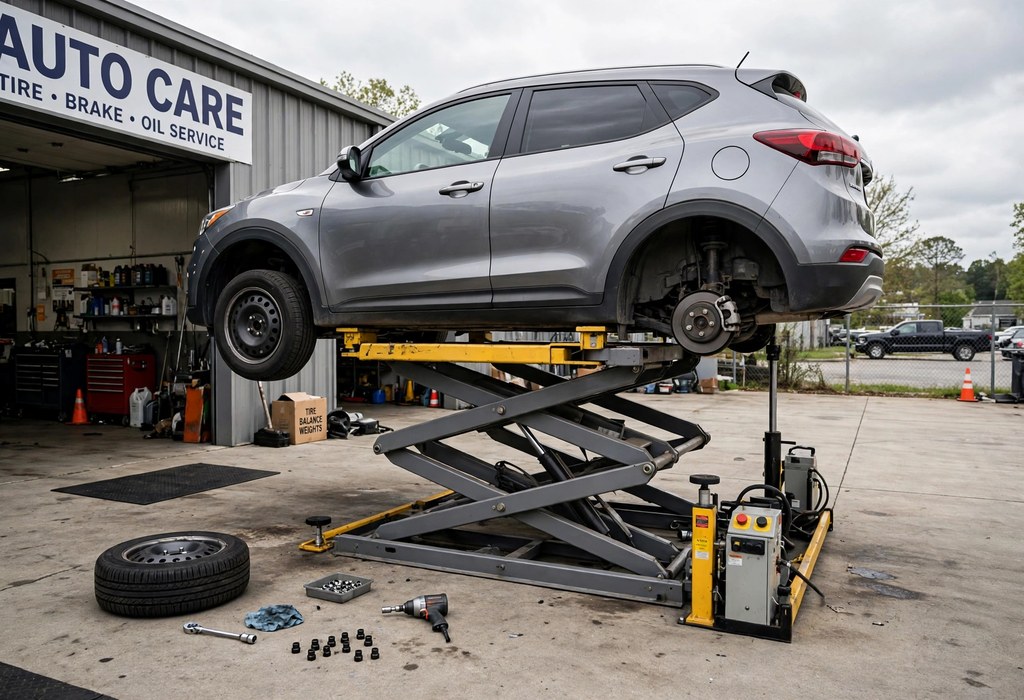
First, manufacturers design mini lifts around short footprints and low profiles. Additionally, these lifts collapse low, so daily parking continues above them. Moreover, you can roll many models aside between weekend projects easily.
In contrast, full-size lifts demand dedicated bays, taller posts, and anchors. Meanwhile, compact lifts preserve walking space, storage room, and door clearance. Overall, this smaller footprint suits shared garages and single bays best.
Main Types of Compact Lifts
Next, you should understand the three main compact lift families clearly. Specifically, scissor, tilt, and frame-engaging designs solve different access needs. Therefore, your regular jobs should guide your final type selection.
Low-Rise and Mini Scissor Lifts
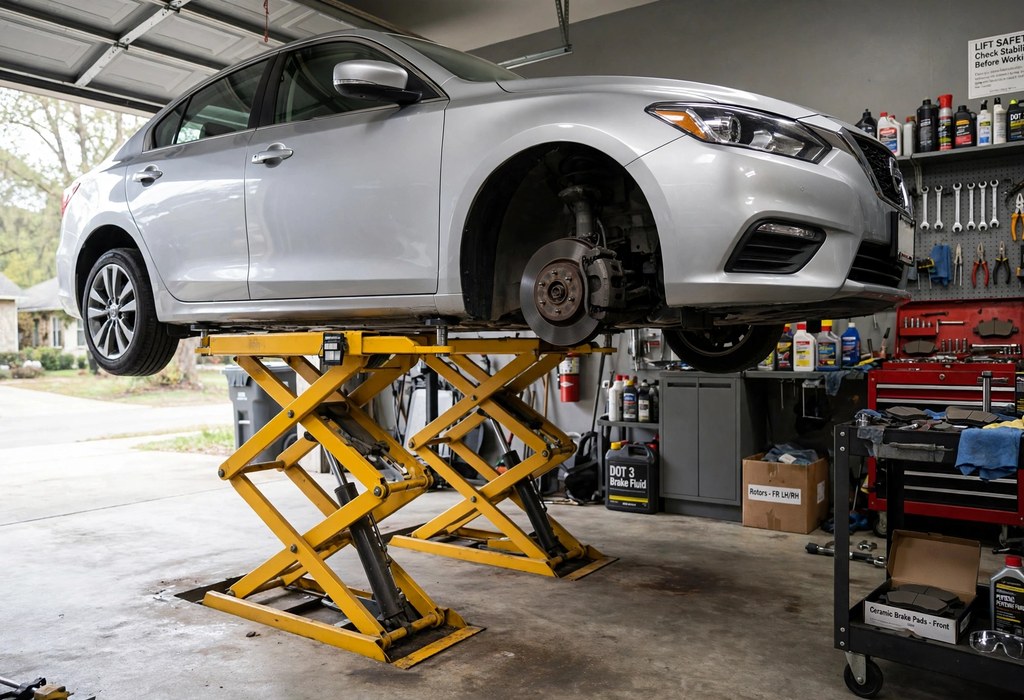
First, low-rise scissor lifts use linked arms and hydraulic pressure together. Additionally, their platform contacts frame rails or reinforced pinch welds securely. Moreover, the wheels hang free, so brake work feels straightforward and stable. However, the center mechanism blocks some middle underbody areas completely.
Tilt Lifts for Angled Access
Meanwhile, tilt lifts pivot the vehicle and expose one end higher. For example, you gain strong access for front suspension and clutch work. Additionally, many tilt lifts operate with drills or small power units. Still, you must level and lock the lift before removing wheels.
Small Frame-Engaging Portable Lifts
Next, frame-engaging portable lifts use two separate low-profile frames. Additionally, a portable car lift for garage setup stores flat against walls. Moreover, open centers improve access for oil changes and inspections greatly. Finally, casters and quick connections simplify setup in shared spaces.
Lift Height, Capacity, and Power Basics
First, lift height decides your working posture during every repair session. Additionally, capacities from 3,000 to 7,000 pounds cover most home vehicles. Therefore, you should verify vehicle weight before trusting any rating.
- Lift height: Most compact lifts raise vehicles about 26 to 48 inches.
- Weight capacity: Small scissor lifts commonly carry roughly 3,000 to 7,000 pounds.
- Power supply: Many mini lifts run on 110V household power for convenience.
- Collapsed profile: Low collapsed heights let sedans drive over many platforms easily.
Jobs a Mini Car Lift Handles Well
Overall, mini lifts shine during wheel-focused and lower-body jobs daily. Moreover, ergonomic working heights reduce kneeling, bending, and back strain. Consequently, routine maintenance feels faster and more enjoyable every weekend.
- Tire and brake work: Open wheel access speeds rotations, pad changes, and inspections.
- Detailing and polishing: Raised panels reduce bending during washing, claying, and polishing tasks.
- Suspension checks: Free-hanging wheels help you inspect bushings, links, and dampers closely.
- Light maintenance: Additionally, you can handle many oil and filter changes comfortably.
Limits Compared With Full-Size Lifts
However, compact lifts cannot match full-size lifts for underbody freedom. For example, transmissions, driveshafts, and exhaust systems sit behind center mechanisms. Additionally, lower heights force creeper or rolling stool work underneath.
In contrast, two-post lifts open the center and raise vehicles higher. Before deciding, compare a car lift for DIY auto repair against your needs. Finally, choose mini designs only when space truly limits bigger options.
Space, Ceiling, and Safety Checks
Measure Your Garage Carefully
First, calculate ceiling need using vehicle height, lift height, and clearance. Additionally, check garage door tracks, openers, lights, and overhead storage carefully. Moreover, measure bay width, length, and turning space around the vehicle. Consequently, careful measurements prevent expensive surprises during delivery and setup.
Confirm Safety and Floor Strength
Next, look for ALI certification from the Automotive Lift Institute program. Additionally, confirm automatic safety locks, pressure relief valves, and stable bases. Moreover, solid level concrete supports safe lifting and even weight distribution. Finally, you should inspect hoses, locks, and lift points before use.
How to Choose the Right Compact Lift
Overall, start with your vehicle, garage, and most frequent repair jobs. Additionally, prioritize comfortable access over maximum height for wheel work. Therefore, shortlist models that fit your ceiling and floor first.
Additionally, you should test drive-over clearance carefully with your lowest daily vehicle. Moreover, portable designs reward garages that host projects only occasionally. Finally, careful comparisons prevent returns and protect your project budget.
- Match capacity first: Always rate the lift above your heaviest vehicle weight.
- Prioritize access next: Pick open-center designs when underbody jobs matter most.
- Value safety always: Choose ALI certified models with automatic mechanical safety locks.
Frequently Asked Questions
Can you put a mini car lift in a one-car garage?
Yes, you can fit most mini lifts inside a standard one-car garage bay.
What is the smallest car lift you can buy?
Moreover, portable frame lifts offer the smallest footprint and store against walls.
How much weight can a small scissor lift hold?
Typically, small scissor lifts carry roughly 3,000 to 7,000 pounds safely.
Do mini car lifts need a special electrical outlet?
Most mini lifts run on standard 110V household power without special wiring.
Can you do exhaust work on a mini car lift?
However, you can handle only limited exhaust work because center access stays restricted.
Conclusion
In short, a mini car lift brings practical lifting power home. Moreover, compact footprints, household power, and strong capacities suit most garages. However, you should accept limited underbody access as the main tradeoff.
Start today by measuring your garage and listing your regular jobs. Next, compare scissor, tilt, and frame options against those measurements carefully. Finally, choose an ALI certified mini lift and schedule your first project.