Car Lift for Garage: Types, Space Requirements, Safety, and Buying Guide
A garage car lift raises a vehicle safely for repairs, inspections, and storage. Owners choose among two-post, four-post, scissor, portable, and low-rise designs. The right choice matches vehicle weight, ceiling height, concrete strength, and daily goals.
Additionally, this guide explains key features, space needs, safety standards, and buying steps. Readers can compare access, footprint, lifting height, and power needs before ordering equipment. Finally, careful planning prevents costly fit problems and supports safer work every day.
Moreover, homeowners will learn how each design handles repairs, parking, and tight layouts. The guide also covers concrete, electrical, delivery, and inspection planning in plain steps. Overall, readers can shortlist confidently without guessing about fit, safety, or workflow.
What a Garage Car Lift Is
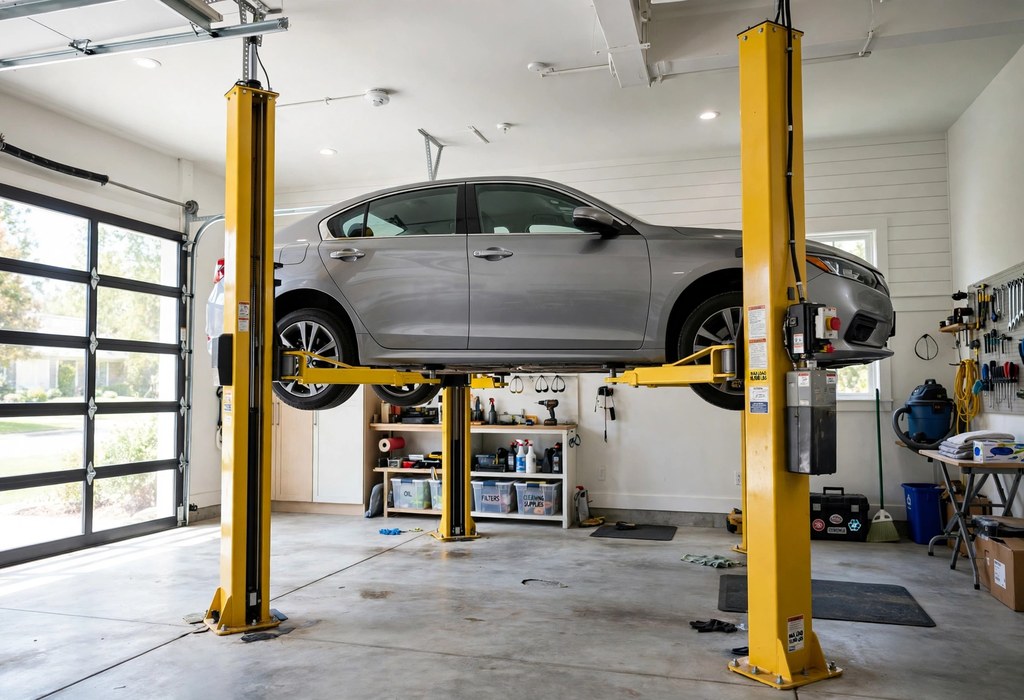
A garage car lift is powered equipment that raises vehicles above the floor. Hydraulic pressure usually drives the lifting system through a compact power unit. Meanwhile, mechanical safety locks hold the vehicle at selected working heights.
Homeowners use lifts for maintenance, detailing, inspections, restoration work, and vehicle storage. For example, owners change oil, rotate tires, and service brakes more comfortably. Additionally, collectors store one vehicle above another inside the same bay.
Unlike a floor jack, a lift raises the vehicle evenly and steadily. Jack stands support short tasks, but lifts provide broader access and stability. Consequently, serious home mechanics treat lifts as long-term garage infrastructure investments.
Manufacturers rate each lift by capacity, lifting height, and overall dimensions. Owners must also consider runway length, arm reach, and drive-through clearance. Together, these specifications decide whether a vehicle fits safely and comfortably.
How a Typical Garage Car Lift Works
First, the operator positions the vehicle carefully over the lifting points. Next, swing arms, runways, or frames contact approved points under the vehicle. Then, the power unit sends hydraulic fluid into the lifting cylinders.
The lift raises both sides evenly when cables and chains synchronize movement. Safety locks engage at intervals and carry the load during work. Finally, the operator releases the locks and lowers the vehicle under control.
Controls usually include a raise button, a lowering handle, and lock releases. Some models also use air pressure to release the safety locks. Therefore, owners should understand every control before lifting any vehicle.
Who Benefits Most From a Garage Car Lift
Frequent home mechanics gain the clearest value from a permanent lift. Restorers also benefit because projects often stay raised for extended periods. Meanwhile, collectors gain storage value without expanding the garage footprint.
Occasional drivers may prefer smaller equipment for tire and brake work. Households with several vehicles often value quick, repeatable lifting every week. Overall, regular use justifies the space, setup, and maintenance commitment best.
Main Types of Garage Car Lifts
Each lift type balances access, footprint, lifting height, and storage value differently. Two-post models maximize underbody access, while four-post models favor drive-on convenience. Additionally, scissor, portable, and low-rise models suit tighter garages and lighter tasks.
Buyers should start with the work they perform most often. Storage goals, repair depth, and vehicle mix then narrow the field. Finally, ceiling and floor limits remove unsuitable designs from consideration.
Two-Post Lifts
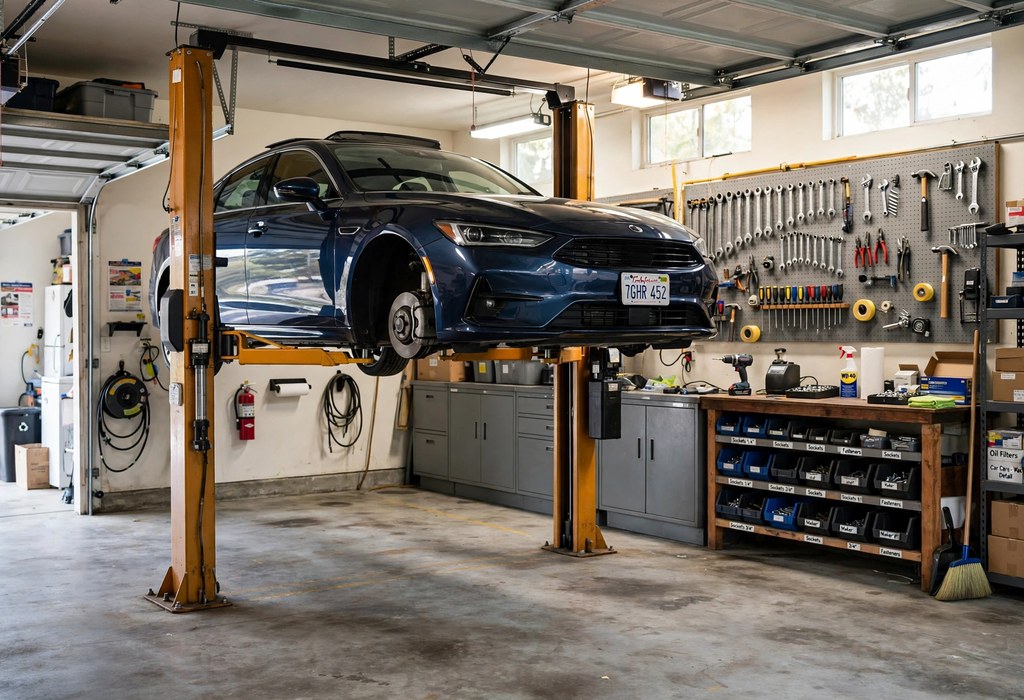
Two vertical columns support four adjustable swing arms beneath the vehicle. This design leaves the underbody open for exhaust, transmission, and suspension work. Moreover, two-post lifts occupy less floor width than most four-post designs.
Overhead models route cables across the top between both columns. Baseplate models route connections across the floor under a low cover. Symmetric and asymmetric arm layouts change door clearance and vehicle positioning.
Owners must anchor two-post columns securely into suitable concrete. Precise arm placement matters because each arm carries part of the load. Consequently, training and careful setup remain essential for this type.
Four-Post Lifts
Four columns support two long runways that carry the vehicle tires. Drivers simply drive onto the runways and set the parking brake. Additionally, this design suits storage, oil changes, and general inspections well.
The runways block some underbody access compared with two-post designs. However, rolling jacks lift wheels off the runways for brake work. Optional drip trays, caster kits, and jack trays increase everyday usefulness.
Four-post lifts spread weight across four separate floor contact points. Many owners value the stable, familiar feel during daily parking. Meanwhile, longer runways and wider frames demand generous bay space.
Scissor Lifts
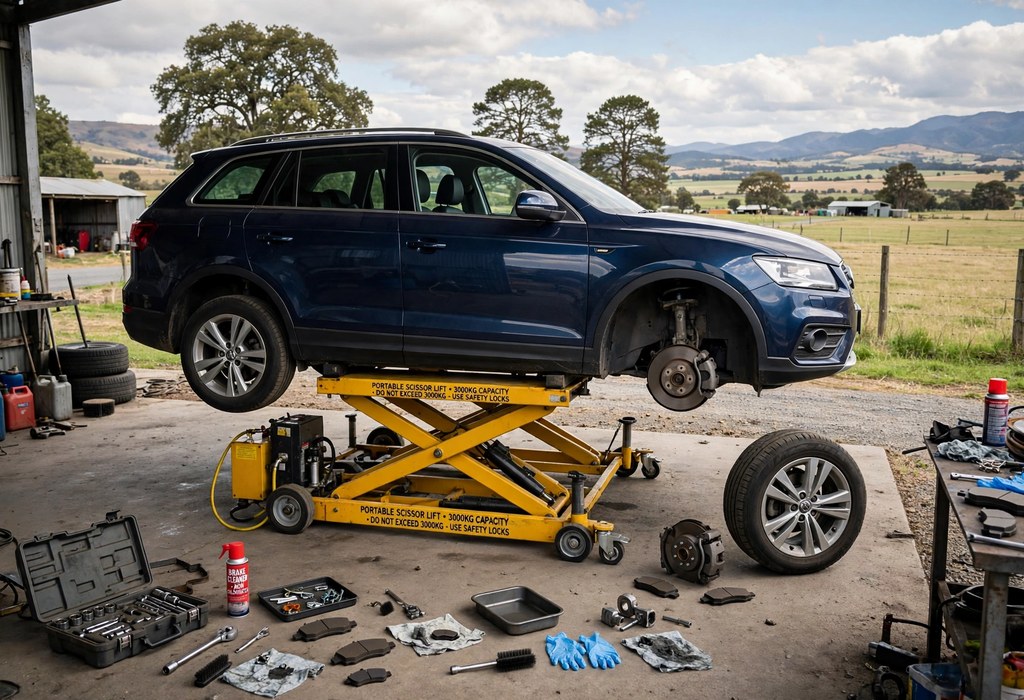
Scissor lifts raise vehicles through crossing steel members under the frame. Mid-rise models lift vehicles enough for comfortable wheel and brake service. Additionally, full-rise scissor models provide standing access in suitable garages.
Drive-over designs sit low and preserve floor space between jobs. Some models stay portable, while others mount flush within the floor. Owners should check platform length against each vehicle wheelbase carefully.
Scissor mechanisms limit some central underbody access on many models. Still, owners prize the compact footprint and straightforward vehicle positioning. Therefore, scissor lifts suit focused maintenance rather than every repair task.
Portable Lifts
A portable car lift uses movable frames or separate lifting units. Drivers can compare portable options and setup requirements during planning and still park normally afterward. These models store against walls or under benches between jobs.
Portable designs need no permanent anchors on most level floors. Owners position both sides, connect the power unit, and lift evenly. Moreover, renters and shared garages value this flexible arrangement highly.
Portable lifts usually raise vehicles lower than full-rise post lifts. Owners therefore work seated or on a creeper during many tasks. Still, tire, brake, and detailing work becomes far easier and safer.
Mini and Low-Rise Lifts
A mini car lift raises vehicles modestly for quick, focused service tasks. Owners can compare compact options for home mechanics when full height access feels unnecessary. Compact frames suit small bays, motorcycles in some setups, and detailing.
Low-rise models lift vehicles a short distance off the floor. Mechanics gain room for oil changes, tire service, and brake repairs. Additionally, the low profile suits garages with very limited ceiling height.
Minimum pad height matters for lowered cars and low ground clearance. Owners should confirm adapter options for varied frames and pinch welds. Consequently, careful fit checks matter more than headline capacity here.
Storage and Parking Lifts
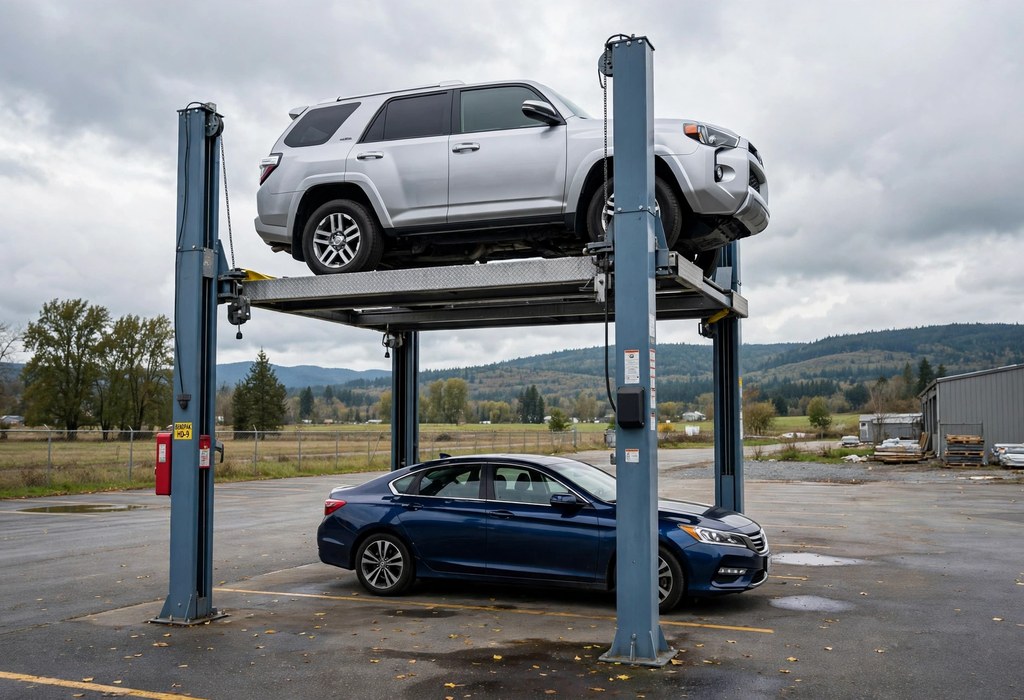
A car storage lift raises one vehicle above another parked vehicle. Collectors often choose parking two cars in one bay to protect seasonal cars inside existing bays. Four-post designs dominate this category because drivers enter them easily.
Storage lifts turn vertical space into an extra parking place. Owners keep a project car raised while parking daily drivers underneath. Meanwhile, drip trays protect the lower vehicle from fluids and debris.
Ceiling height decides whether two vehicles truly stack with clearance. Garage door tracks, openers, and lights also affect usable stacking space. Therefore, owners should model the full stack before ordering any equipment.
Comparing Post Lifts Directly
A two-post vs four-post car lift comparison clarifies access, footprint, and storage tradeoffs. Readers can weigh a two-post versus four-post designs choice against daily work habits. Repair-focused owners usually prioritize open underbody access and arm flexibility.
Storage-focused owners usually prioritize easy drive-on entry and long-term parking. Two-post lifts demand precise positioning before every single lift cycle. In contrast, four-post lifts accept vehicles quickly with minimal setup.
Both designs serve home garages well when owners match them honestly. Vehicle weight, wheelbase, and door swing also shape the better choice. Overall, daily workflow decides more than popularity or first impressions.
Key Features to Compare on a Garage Car Lift
Specifications look similar across catalogs, but details change daily usability greatly. Capacity, rise height, and drive-through width deserve attention first. Additionally, lock design, arm style, and power needs shape ownership experience.
Buyers should read full dimension charts rather than headline numbers alone. A lift must fit the vehicle, the driver, and the working space. Consequently, owners should verify every critical measurement twice before ordering.
- Rated capacity: Manufacturers state the maximum load the lift handles safely. Owners should keep their heaviest vehicle comfortably below that rating.
- Lifting height: Maximum rise determines whether mechanics stand, sit, or crouch underneath. Owners must match rise height to ceiling limits and personal comfort.
- Safety locks: Multiple lock positions hold the load mechanically at varied heights. Owners should always rest the vehicle fully on engaged locks.
- Swing arms: Telescoping arms reach varied lifting points on cars and trucks. Low-profile arms help lowered vehicles and modern aerodynamic designs greatly.
- Runways and ramps: Long runways support longer wheelbases and varied track widths. Removable approach ramps reduce trip hazards and save bay length.
- Power unit: Most full-size lifts use 220V power for stronger hydraulic performance. Smaller models may use 110V power and suit lighter duty cycles.
- Drive-through clearance: Clear width between columns decides which vehicles enter without difficulty. Owners should include mirrors, wide tires, and running boards in measurements.
- Accessories: Rolling jacks, drip trays, and caster kits expand four-post versatility. Adapter sets expand two-post fit across trucks and unibody vehicles.
Certification deserves separate attention during every serious comparison. Independent testing verifies structural strength, lock performance, and control safety. Therefore, buyers should treat certification as a core feature, not decoration.
Warranty coverage also varies between structure, hydraulics, and power units. Owners should read parts availability and support terms before purchasing. Finally, clear manuals and responsive support simplify installation and troubleshooting.
Benefits of a Garage Car Lift
A lift changes routine maintenance from awkward floor work into organized work. Mechanics see fasteners, leaks, and worn parts far more clearly. Moreover, better posture reduces fatigue during longer repair sessions significantly.
Raised vehicles expose the full underbody for inspections and cleaning. Owners catch rust, damaged lines, and loose shields much earlier. Consequently, preventive care becomes easier to schedule and complete thoroughly.
- Better access: Open underbody access simplifies exhaust, drivetrain, and suspension repairs. Owners reach components directly instead of working around jack stands.
- Safer workflow: Mechanical locks hold vehicles steadily during extended repair sessions. Owners avoid repeated jacking and repositioning throughout each project day.
- Extra parking: Storage designs add a parking level within the existing footprint. Collectors protect more vehicles indoors without renting outside storage space.
- Faster maintenance: Repeatable setup shortens oil changes, rotations, and seasonal inspections. Owners finish routine tasks sooner and keep vehicles on schedule.
- Cleaner inspections: Good working height pairs well with lights, creepers, and stools. Owners spot leaks and wear before small faults become failures.
- Project flexibility: Long-term projects stay raised while owners gather parts and plan. Restorers keep momentum without pushing vehicles outside between work sessions.
Home lifts also support detailing, underbody washing, and seasonal wheel swaps. Enthusiasts value consistent access during winter storage checks and spring preparation. Overall, convenience encourages owners to inspect vehicles more often and thoroughly.
Garage Car Lift Space Requirements
Space planning decides success long before the lift arrives at home. Owners must measure ceiling height, bay width, bay depth, and door travel. Additionally, they must confirm floor strength, slope, and concrete condition early.
A tape measure and a simple scale drawing reveal most problems. Owners should include toolboxes, shelves, stairs, and water heaters as obstacles. Finally, they should walk the planned bay and simulate daily movements.
Ceiling Height and Vertical Clearance
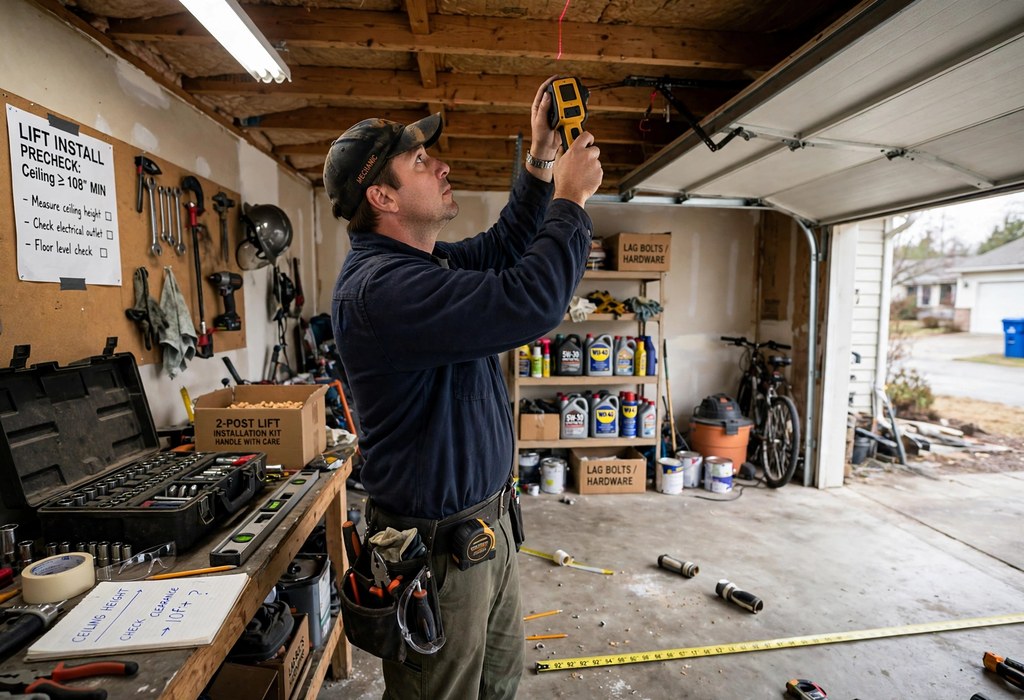
First, calculate ceiling height and clearance requirements from vehicle height plus lift height. Owners then add a few inches of clearance above the vehicle. Lights, openers, ducts, and door tracks may lower usable height further.
The basic formula combines vehicle height and maximum lift height. Owners add a few inches of safety clearance above the roof. Meanwhile, taller vehicles and greater rise heights demand taller ceilings.
Storage setups require the combined height of both stacked vehicles. Owners must also include runway thickness within that total stack height. Therefore, careful vertical math protects roofs, lights, and stored vehicles.
Bay Width, Depth, and Working Room
Finding the best car lift for a small garage starts with honest measurements. Owners can study space-saving models for tight bays layouts before choosing any permanent equipment. Compact models reward narrow bays when owners plan movements carefully.
Columns, runways, and arms consume more room than vehicle width suggests. Owners need walking space beside doors, hoods, trunks, and tool carts. Additionally, open vehicle doors require generous side clearance during positioning.
Bay depth must include ramps, bump stops, and safe entry angles. Drivers need room to align the vehicle before entering the lift. Consequently, owners should test layouts with cones or tape outlines first.
Concrete and Floor Requirements
Two-post anchors commonly need concrete at least four inches thick. That concrete should reach at least 3,000 PSI in compressive strength. Moreover, the slab must stay level, cured, and free from cracks.
Four-post lifts spread loads widely, yet still need sound concrete. Owners should avoid anchoring near expansion joints, seams, and damaged areas. Professionals can test questionable slabs before owners commit to drilling anchors.
Floor slope affects vehicle stability, drainage, and lift alignment during setup. Asphalt, pavers, and wood floors cannot support anchored lift columns safely. Therefore, owners with doubtful floors should consult qualified concrete professionals.
Doors, Power, and Daily Access
Garage doors sweep overhead and can strike raised vehicles or columns. Owners should test door travel with the planned vehicle position marked. High-lift door tracks and side-mount openers sometimes recover valuable clearance.
Most full-size lifts use a dedicated 220V electrical circuit. Smaller lifts may use 110V power through a standard household circuit. Licensed electricians should handle new circuits, breakers, and disconnect switches.
Daily access matters as much as maximum dimensions on paper. Owners should preserve paths for bins, bicycles, ladders, and seasonal gear. Overall, a workable layout keeps the lift useful rather than obstructive.
Safety Standards and Safe Use
Every owner should make weight ratings and inspection tips a daily habit, not an afterthought. Certified equipment, sound floors, and disciplined routines work together as one system. Shortcuts undermine all three protections at the same time.
ALI certification is the recognized safety standard for vehicle lifts. The Automotive Lift Institute oversees independent testing against established safety standards. Buyers should verify certification for the exact model they plan to buy.
Certification confirms testing of locks, structures, controls, and overload behavior. However, certification never excuses poor installation or skipped maintenance checks. Consequently, owners remain responsible for correct setup and daily discipline.
- Respect ratings: Never exceed the rated capacity of the lift or adapters. Owners should include cargo, accessories, and vehicle fluids in weight estimates.
- Position carefully: Center the vehicle and place arms only on approved lifting points. Owners should consult the vehicle manual for exact point locations.
- Engage locks: Lower the vehicle onto mechanical locks before starting any work. Hydraulic pressure alone should never support a vehicle during repairs.
- Clear the area: Keep people, pets, and tools away during raising and lowering. Operators should watch all corners continuously throughout each lift cycle.
- Inspect routinely: Check cables, chains, hoses, anchors, and locks before regular use. Owners should remove damaged equipment from service until repairs finish.
- Train users: Every operator should read the manual and practice empty cycles. Households should restrict controls to trained adults at all times.
Balanced loading protects both the vehicle and the lifting structure. Uneven loads strain arms, runways, cables, and anchor points unnecessarily. Therefore, operators should stop immediately when any side rises unevenly.
Personal habits matter during every stage of raised vehicle work. Operators should never rush positioning, lock engagement, or final lowering. Finally, calm routines turn powerful equipment into a controlled tool.
How to Buy the Right Garage Car Lift
Smart buying starts with tasks, vehicles, and garage limits, not catalogs. Owners should list weekly jobs, occasional jobs, and storage goals separately. Then, they can rank access, height, and convenience against those jobs.
Step One: Define the Main Job
Repair work favors open access, strong locks, and flexible lifting points. Storage work favors drive-on ease, drip protection, and stable long-term support. Meanwhile, quick service favors low profiles and fast, simple setup.
Owners who mix jobs should identify the most frequent job first. Secondary jobs can rely on accessories or occasional workarounds instead. Consequently, the main job should drive the core design choice.
Step Two: Match Vehicles and Capacity
Home lift capacities commonly range from 6,000 to 10,000 pounds. Owners should weigh their heaviest vehicle with fuel and cargo included. Additionally, they should consider future trucks or heavier vehicles realistically.
Wheelbase and track width matter alongside total vehicle weight. Long vehicles may exceed runway length or swing arm reach limits. Therefore, owners should compare full vehicle dimensions against lift charts.
Step Three: Confirm the Garage Fit
Owners should recheck ceiling, width, depth, concrete, and power before ordering. They should also confirm delivery access for long, heavy freight shipments. Moreover, they should verify door clearance with vehicles fully raised.
A site sketch helps owners share accurate details with knowledgeable sellers. Photos of ceilings, doors, and floors reveal obstacles that measurements miss. Finally, owners should resolve every fit question before paying any deposit.
Step Four: Compare Total Ownership Factors
Owners should include equipment and installation expenses factors beyond the equipment quote itself. Delivery, installation, electrical work, and concrete repairs all affect budgets. Accessories, inspections, fluids, and replacement parts add ongoing ownership costs.
Buyers should compare warranty terms across structure, hydraulics, and electrical parts. They should also confirm local service support and parts availability early. Additionally, they should ask about manuals, training materials, and setup guidance.
Used lifts demand extra caution and thorough professional inspection before purchase. Wear, missing adapters, and unknown histories can erase apparent savings quickly. Overall, documented condition and complete hardware matter more than appearance.
Garage Car Lift Installation and Setup Overview
Learning to install a car lift in a residential garage starts with professional guidance. Homeowners can review how crews step-by-step installation guide safely before scheduling any work. Qualified installers protect anchors, alignment, wiring, and final safety checks.
Installers position columns or frames, level components, and torque anchors carefully. They connect hydraulics, equalization systems, locks, and the power unit methodically. Then, they test several empty cycles before lifting any vehicle.
Four-post and portable models may suit careful owner assembly better. Still, owners must follow torque values, leveling steps, and manuals exactly. Consequently, uncertain owners should hire experienced installers without hesitation.
Electrical connections deserve licensed professional attention in most home garages. Local permits and codes may govern circuits, disconnects, and equipment placement. Finally, owners should keep manuals, certifications, and installation records organized.
Maintenance and Inspection Habits
Regular care keeps locks crisp, hydraulics clean, and structures dependable. Owners should build brief checks into every week of regular use. Additionally, deeper inspections should follow the manufacturer schedule consistently.
- Daily checks: Operators scan for leaks, damage, debris, and unusual noises first. They also confirm smooth lock engagement before raising any vehicle.
- Monthly checks: Owners inspect anchor torque, cable condition, and hydraulic fluid levels. They clean runways, arms, and platforms during the same session.
- Lubrication: Owners lubricate moving contact points exactly as manuals direct. Proper lubrication reduces wear, noise, sticking, and uneven lifting motion.
- Hydraulic care: Owners keep fluid clean and replace hoses showing cracks promptly. They also protect hoses from tires, tools, and sharp edges.
- Annual review: Qualified technicians inspect structure, locks, controls, and safety systems thoroughly. Owners record findings and correct small faults before they grow.
Clean floors support safer lifting and easier leak detection daily. Owners should wipe spills quickly and keep lifting zones organized. Moreover, good lighting helps operators spot cracks, wear, and misalignment.
Replacement parts should match manufacturer specifications for locks and cables. Improvised repairs create hidden risks and may void warranty coverage. Therefore, owners should treat safety components with particular care always.
Matching a Lift to Your Projects
The best car lift for DIY auto repair supports frequent, varied maintenance tasks. Enthusiasts can select a scissor, two-post, and four-post options for DIY repairs to match project frequency. Frequent transmission and exhaust work favors open two-post access strongly.
Detailers often prefer low-rise or scissor access for wheels and rockers. Their work demands quick setup more than maximum standing height. Meanwhile, brake specialists value wheel access and stable mid-height platforms.
Restorers value steady support during long, multi-stage project timelines. They also value parts storage beneath or beside the raised vehicle. Collectors, in contrast, value easy stacking and gentle daily operation.
Households should also consider who will operate the lift regularly. Simple drive-on systems suit shared use after proper training sessions. Overall, honest self-assessment prevents impressive but impractical purchases.
Common Buying Mistakes to Avoid
Many buyers measure ceiling height but forget garage door travel. Others check vehicle weight but ignore wheelbase and track width. Additionally, some buyers overlook concrete quality until installation day arrives.
Some shoppers chase maximum capacity while neglecting access and footprint. Excess capacity cannot fix poor fit or awkward daily workflow. Consequently, balanced specifications beat headline numbers in real home garages.
Buyers sometimes skip certification while chasing a lower purchase price. That gamble risks safety, resale value, and long-term parts support. Finally, careful buyers verify everything before freight leaves the warehouse.
Another common mistake involves trusting memory instead of written measurements. Ceiling obstructions, door arcs, and vehicle mirrors surprise unprepared buyers often. Therefore, owners should photograph, sketch, and recheck every critical dimension twice.
Lift Designs and Layout Variations
Beyond basic types, design details change door access and vehicle fit. Arm geometry, column placement, and overhead structures all shape daily use. Additionally, small design choices affect low cars and long trucks differently.
Buyers should picture opening doors and walking around raised vehicles. That simple exercise reveals awkward columns and tight working zones early. Consequently, layout variations deserve attention alongside capacity and height.
Symmetric and Asymmetric Layouts
Symmetric two-post lifts center the vehicle evenly between both columns. This balanced layout suits many trucks and longer vehicles well. Moreover, even positioning simplifies consistent arm placement across varied vehicles.
Asymmetric layouts rotate the vehicle slightly toward the rear columns. Drivers gain wider door swing and easier cabin entry afterward. Therefore, daily drivers and frequent door access favor asymmetric designs.
Clear-Floor and Baseplate Designs
Clear-floor models connect columns overhead and keep the floor open. Mechanics roll creepers, jacks, and transmission stands across without obstruction. Additionally, the overhead bar protects synchronization cables from floor damage.
Baseplate models connect columns through a low covered floor plate. Lower overall height helps garages with limited overhead clearance above. However, the plate creates a small bump during creeper movement.
Alignment and Specialty Considerations
Alignment-ready four-post lifts add turn plates and rear slip plates. Rolling jacks then let technicians adjust wheels during alignment work. Most home owners skip these additions unless they perform alignments regularly.
Specialty designs serve motorcycles, all-terrain vehicles, and very long wheelbases. Adapters and wider runways expand fit across unusual vehicle shapes. Overall, specialty gear makes sense only for confirmed recurring needs.
Working Comfortably Under a Lift
Comfort shapes safety because tired mechanics rush, stoop, and make mistakes. Good lighting, seating, and tool placement keep attention on the vehicle. Moreover, organized bays reduce trips, spills, and dropped fastener problems.
Overhead and portable lights reveal leaks, cracks, and worn components clearly. Owners should position lights before raising the vehicle each time. Additionally, drip pans and absorbent mats keep floors clean and predictable.
Rolling stools and creepers match mid-rise and low-rise working heights. Standing access under full-rise lifts reduces strain during longer jobs. Therefore, owners should match seating and posture to lift height.
Tool carts keep sockets, torque wrenches, and fluids within easy reach. Owners should stage parts in labeled trays before starting disassembly. Finally, tidy staging speeds reassembly and reduces missing hardware stress.
Planning Delivery and Long-Term Ownership
Lifts arrive as heavy freight on long pallets or crates. Owners should plan driveway access, unloading help, and dry storage space. Additionally, they should inspect packaging and inventory every component immediately.
Missing adapters, anchors, or manuals delay installation and frustrate owners. Photographing delivery condition helps resolve freight questions quickly and fairly. Consequently, careful receiving protects schedules, warranties, and installation budgets.
Long-term owners keep records of inspections, repairs, and fluid changes. Documentation supports warranty claims, troubleshooting, resale conversations, and insurance questions. Moreover, records prove disciplined care when owners eventually sell equipment.
Households should also discuss operating rules with everyone using the garage. Children and guests should never play near raised vehicles or controls. Overall, clear household rules protect people, vehicles, and equipment daily.
Frequently Asked Questions
How much ceiling height does a home garage car lift need?
Owners must add vehicle height, maximum lift height, and several inches of clearance.
Can I install a car lift in a two-car garage?
Most two-car garages can fit a lift after owners verify width, depth, and ceiling height.
What concrete thickness does a two-post car lift need?
Manufacturers commonly require concrete at least four inches thick and rated at 3,000 PSI.
Are garage car lifts safe for home use?
Certified lifts operate safely when owners follow ratings, locks, inspections, and manufacturer instructions.
Do home car lifts need 220V power?
Most full-size lifts use 220V power, while smaller models often run on 110V power.
Conclusion
The right garage car lift matches your vehicles, space, and work honestly. Compare types, capacities, locks, power needs, and certification before ordering anything. Moreover, verify ceiling height, concrete strength, and door travel with care.
Start today by measuring your garage and listing your main jobs. Then, shortlist certified models that fit those measurements and tasks. Finally, order your chosen lift and schedule qualified installation with confidence.