Coleman CT200U Top Speed: What It Really Does Stock VS Modified
If you just bought a Coleman CT200U or you’re about to, the top speed question is probably already on your mind. Coleman advertises 20 mph on most product pages. But spend five minutes in any mini bike forum and you’ll see riders claiming 24, 28, even 30-something miles per hour on the same bike. So who’s right?
The short answer: both, kind of. The advertised number is conservative and controlled. The real-world number depends on your weight, your terrain, and whether the governor is still doing its job.
Here’s what the CT200U actually does, and what changes if you start pulling things apart.
What Coleman Says vs. What Actually Happens
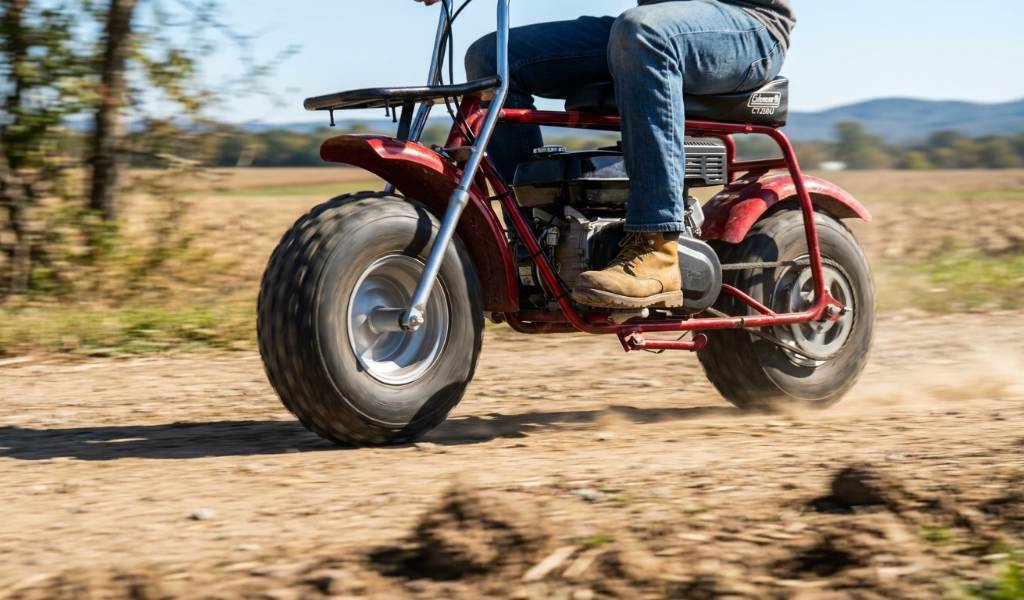
Coleman top lists show the CT200U’s top speed at 20 mph on most official spec sheets. Some product pages and retailers show 24 mph. The number varies because different model years and variants were spec’d slightly differently.
In practice, most riders on flat terrain with a reasonable load report somewhere between 22 and 26 mph out of the box. A lighter rider on packed dirt can sometimes squeeze out a touch more. A heavier rider on grass will see less.
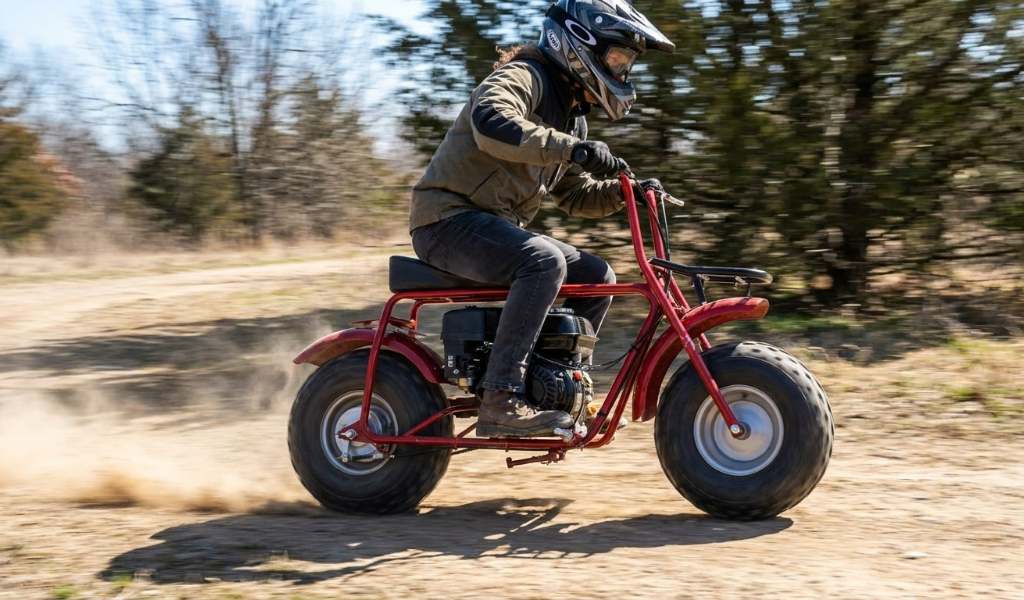
The stock CT200U is deliberately set up this way. The factory governor limits the engine to around 3,600 RPM, which keeps speeds conservative and protects the internal components from the stress of running hard all day. Beyond the governor, the gearing plays a role too. The CT200U’s front and rear sprockets are geared for acceleration rather than top-end speed, which is actually a smart choice for trail riding. Quick off the line feels great on a trail. A higher top speed matters less when you’re weaving through trees.
What Affects the Speed You Actually See
Even with the governor in place, your real-world top speed is not a fixed number. Several things shift it.
Rider weight. This is the biggest variable. A 140-pound rider will always go faster than a 220-pound rider on the same stock bike with the same throttle input. The 196cc engine produces the same power regardless of who’s on it, but it’s moving very different amounts of mass.
Terrain. Flat, smooth hardpack is ideal. Loose gravel, grass, and soft dirt all add rolling resistance and knock a few mph off your top end. Going uphill reduces speed; going downhill lets the bike briefly exceed its usual ceiling.
Tire pressure. The CT200U runs on large, low-pressure AT tires inflated to around 10 PSI from the factory. Running them slightly higher can reduce rolling resistance a bit, though it also makes the ride firmer.
Altitude. The CT200U has a carbureted engine. At higher elevations the air is thinner, the fuel mixture runs rich, and the engine makes slightly less power. It’s not dramatic at most riding altitudes, but it is a real factor for anyone riding in the mountains.
Break-in period. A brand-new engine runs a little tight. Most owners notice the bike feeling freer and pulling a bit harder after the first few hours as things seat in properly.
What Happens When You Remove the Governor
This is the first thing most CT200U owners do. The governor is a mechanical device inside the engine that limits RPMs. Removing or bypassing it takes that ceiling off and the engine can rev past 3,600 RPM freely.
With just the governor out and no other changes, the CT200U typically jumps into the 30 to 38 mph range. One owner on a farming forum documented going from the low 20s to a GPS-certified 31 mph by simply removing the throttle governing bolt and zip-tying the governor spring. That’s a meaningful jump and it cost absolutely nothing.
Governor removal is free, takes about 20 minutes with basic tools, and is the single most impactful speed mod you can do without spending money. The trade-off is that you’re running the engine harder than it was originally designed for. The internal components on the base CT200U are built for factory RPMs, not extended high-RPM use. It’s not going to destroy itself immediately, but longevity becomes more of a consideration the harder you push it.
Stock vs. Modified: The Speed Numbers
Here’s how the top speed picture looks at different stages:
| Configuration | Approximate Top Speed |
| Stock, lighter rider (under 160 lbs) | 24 to 26 mph |
| Stock, heavier rider (180 to 220 lbs) | 20 to 23 mph |
| Governor removed, no other changes | 30 to 38 mph |
| Governor removed + carb upgrade | 38 to 45 mph |
| Governor removed + carb + exhaust + gearing changes | 45 mph and above |
These are real-world ranges based on owner reports, not manufacturer figures. Every bike is a little different, and the way you ride matters too.
The Carb Upgrade: The Next Logical Step
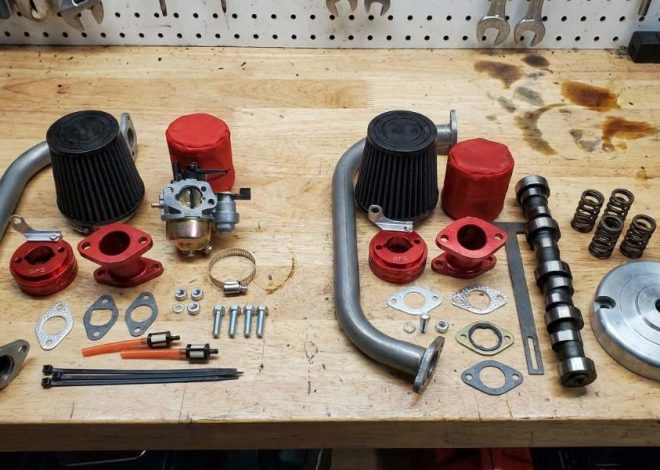
Once you’ve removed the governor, the stock carburetor becomes the next thing holding you back. The factory carb on the CT200U is sized conservatively for stock RPM ranges. When the engine is freed up to rev harder, it needs more air and fuel to match, and the stock carb struggles to deliver that.
Swapping in an aftermarket unit, like a Nibbi carb, a 22mm flat slide, or a 24mm performance carb, helps the engine breathe better at higher RPMs. Several CT200U owners have specifically called out the Nibbi carb as a solid choice. It’s not an expensive part and it is a direct swap on this platform.
With governor removal and a carb upgrade together, most riders land in the 38 to 45 mph range depending on gearing and weight. That’s a very different machine from the cautious, 20 mph stock setup.
A Note on Safety
Going faster on a CT200U is genuinely fun. But the bike’s braking, suspension, and tires were designed for the stock speed range. At 40-plus mph on a stock setup, the single drum brake (or disc on newer variants) is working harder than it was built for.
The base CT200U also has no front suspension. At trail speeds in the low-to-mid 20s, this is fine. At 40 mph over rough ground, it’s a different conversation entirely. If you’re going to push the speed up, it’s worth also thinking about your stopping ability and your riding surface.
At minimum, wear a helmet. Gloves and eye protection are smart additions at any speed and become more important once you start modifying.
The Bottom Line
Stock, the Coleman CT200U is a 22 to 26 mph bike for most riders on reasonable terrain. It’s not trying to be a speed machine, and it does its job well in that range. But the upgrade path is well-mapped and genuinely accessible. Governor removal alone pushes it into different territory, and adding a better carb takes it further still.
If speed is your main goal, the CT200U responds well to modification. The community has figured this stuff out and documented it thoroughly. You’re not starting from scratch.