Garage Car Lift Safety: Weight Ratings, Concrete Thickness, and Inspection Tips
Garage car lift safety starts with respecting rated capacity and solid concrete. Additionally, drivers must center vehicle weight and inspect locks, cables, and anchors regularly. Together, these habits prevent tipping, slipping, and sudden drops during service work.
First, owners should confirm total vehicle weight before raising any vehicle. Next, owners should verify concrete thickness and slab strength before installation. Finally, owners should follow a written inspection routine before every lift cycle. Overall, consistent checks turn occasional caution into dependable daily protection.
Moreover, only trained adults should operate controls and supervise lifts. Consequently, anyone noticing damage should stop work and call a professional.
Understanding Rated Capacity and Weight Distribution
Rated capacity states the maximum total weight a lift can raise safely. However, owners must never exceed rated capacity for any reason. Also, accessories, cargo, and fluids add weight beyond basic curb weight.
Additionally, gross weight matters more than empty weight during vehicle selection. Readers can compare lift styles inside this car lift for garage before choosing equipment. Therefore, careful buyers match vehicle weight against capacity with reserve margin.
Center the Vehicle Every Time
Drivers should center vehicle weight between the posts or on runways. Moreover, uneven loading strains arms, adapters, locks, and anchor points. Then, operators should position adapters under manufacturer approved lifting points only.
First, operators should raise vehicles slightly and check stability before continuing. Next, operators should lower vehicles immediately after noticing rocking or shifting. Finally, operators should remove heavy cargo before lifting unbalanced trucks or vans.
Why ALI Certification Matters
The Automotive Lift Institute, or ALI, administers independent lift safety certification. Additionally, ALI certification confirms third party testing against recognized safety standards. Therefore, buyers gain stronger assurance than manufacturer claims alone provide.
Concrete Thickness and Strength Requirements
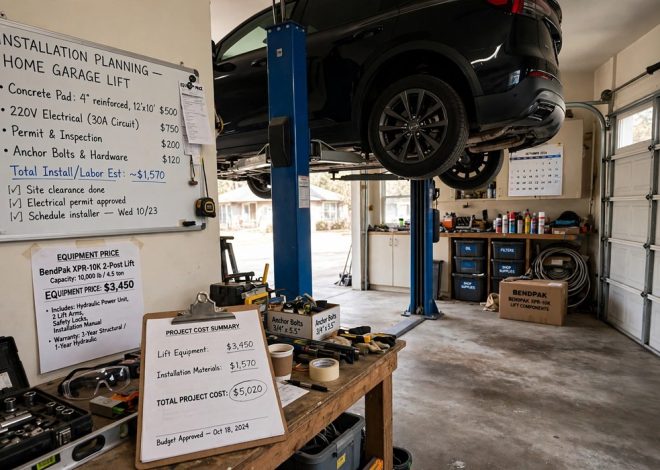
Two post anchors commonly require concrete at least four inches thick. Additionally, slabs should reach at least 3,000 PSI compressive strength. Therefore, owners must verify both thickness and strength before drilling anchors.
First, installers should core drill or inspect edges to confirm depth. Homeowners can review each preparation stage through this how to install a car lift resource carefully. Finally, installers should allow fresh concrete to cure fully before anchoring.
Anchor Integrity Checks
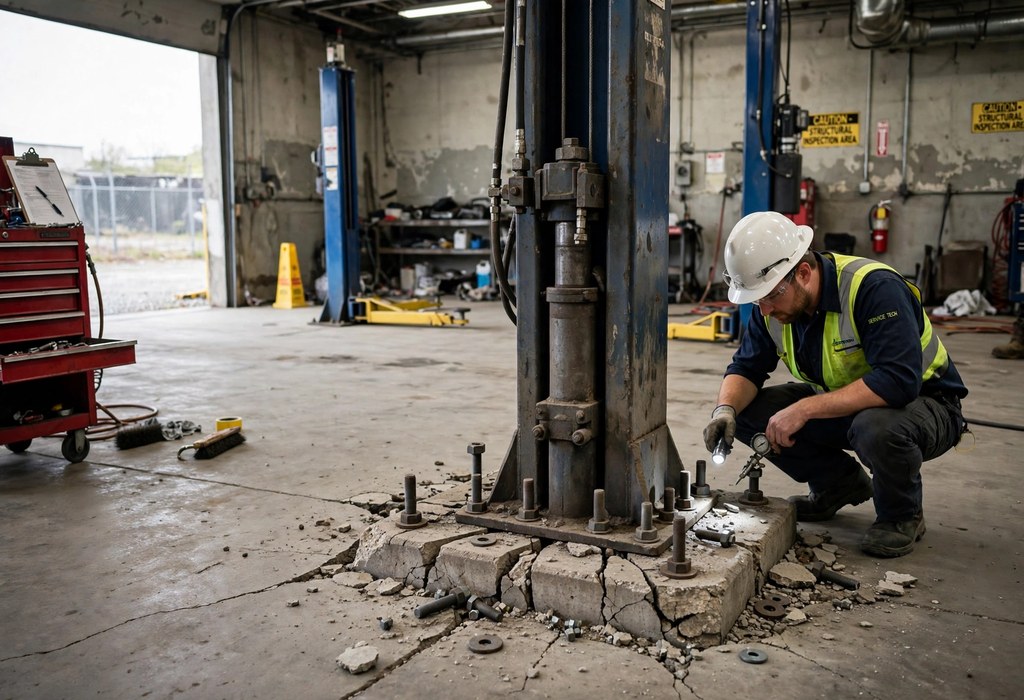
Installers must torque anchor bolts exactly to manufacturer specifications every time. Also, owners should check anchors for looseness, corrosion, and surrounding cracks. Then, owners should replace damaged anchors rather than tightening compromised hardware repeatedly.
Garage Car Lift Safety Locks, Cables, and Hydraulics
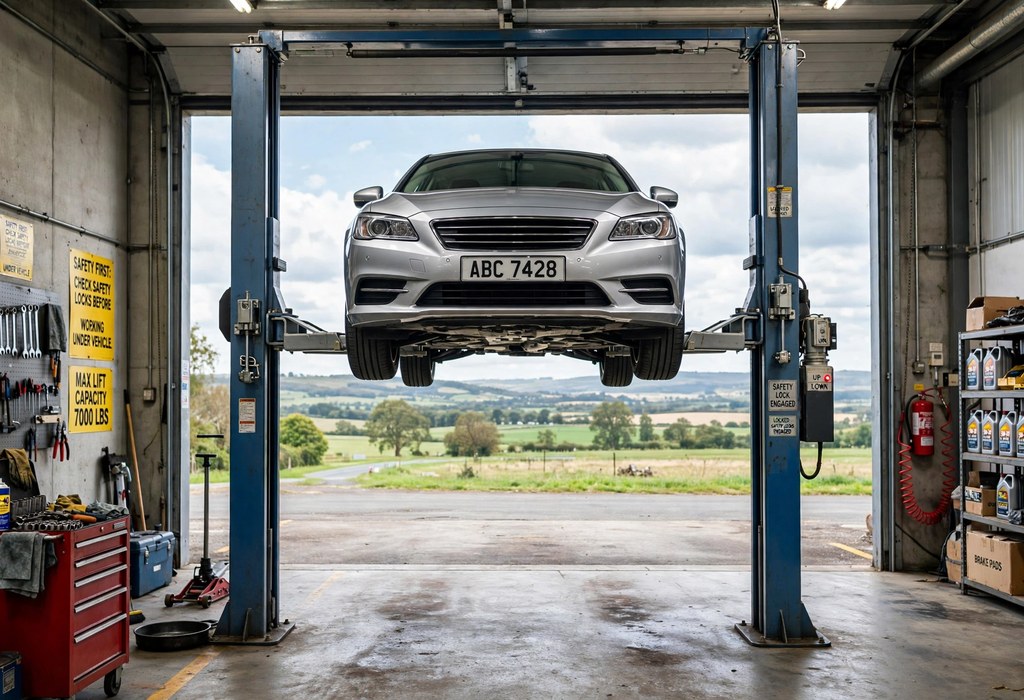
Safety locks must engage evenly at each height stop on both sides. Additionally, operators should lower vehicles onto locks before starting underbody work. Therefore, hydraulic pressure alone should never support a raised vehicle.
Moreover, different lift designs distribute loads and locking duties differently. Readers can weigh lock designs through this two-post versus four-post comparison before selecting a system. Finally, owners should choose designs matching vehicle size and service tasks.
Cables, Chains, and Hoses
- Cables and chains: Regularly inspect strands for fraying, stretching, corrosion, and broken wires.
- Hydraulic hoses: Routinely check hoses for leaks, bulges, abrasion, and loose fittings.
- Safety locks: Always confirm every lock engages evenly and releases smoothly together.
- Anchor bolts: Periodically verify torque and inspect surrounding concrete for new cracks.
A Repeatable Garage Car Lift Safety Inspection Routine
Daily Garage Car Lift Safety Checks Before Lifting
First, operators should clear the bay and inspect the floor area. Next, operators should test locks, controls, cables, and hydraulic response. Also, operators should confirm adapters, arms, and pins sit securely.
Monthly Garage Car Lift Safety Checks for Wear
Monthly, owners should inspect anchors, torque marks, and concrete surfaces carefully. Moreover, owners should lubricate moving parts exactly as manufacturers direct. Then, owners should document wear, leaks, noises, and corrective actions taken.
Annual Garage Car Lift Safety Inspection
Annually, qualified inspectors should examine structural, electrical, and hydraulic systems thoroughly. Additionally, professionals can test anchor integrity and lock synchronization under load. Finally, owners should keep inspection records with dates and findings.
Garage Car Lift Safety Habits for Daily Operation
Only trained adults should operate the lift and control every movement. Additionally, operators should keep bystanders, children, and pets outside the bay. Moreover, operators should communicate clearly before raising or lowering any vehicle.
First, operators should raise vehicles slowly and watch alignment continuously. Next, operators should stop immediately after hearing grinding, popping, or hissing. Finally, operators should lower vehicles fully before removing adapters or tools.
Warning Signs That Mean Stop
Uneven lifting signals lock, cable, or hydraulic problems requiring immediate attention. Additionally, tilting vehicles, shifting adapters, or slipping tires demand immediate lowering. Therefore, operators should clear the area and stop using the lift.
- Concrete cracks: Stop immediately when cracks spread outward from anchor bolts.
- Cable damage: Stop immediately when strands fray, stretch unevenly, or corrode visibly.
- Hydraulic leaks: Stop immediately when fluid pools, sprays, or drips near fittings.
- Unusual noises: Stop immediately when grinding, snapping, or popping sounds repeat.
Consequently, owners should tag faulty lifts and prevent further use. Moreover, qualified professionals should diagnose structural or hydraulic faults before repairs. Finally, owners should retest repaired lifts empty before lifting vehicles.
Frequently Asked Questions
How thick should concrete be for a two-post lift?
Most two-post anchors require concrete at least four inches thick and 3,000 PSI strong.
How often should you inspect a car lift?
Owners should inspect lifts daily before use, monthly for wear, and annually professionally.
What does ALI certification mean on a car lift?
ALI certification confirms independent testing against recognized Automotive Lift Institute safety standards.
Can you lift a vehicle heavier than the rated capacity?
Never exceed rated capacity, because overloads strain posts, arms, cables, anchors, and locks.
Why does my car lift rise unevenly?
Uneven lifting often signals cable stretch, lock problems, air, or hydraulic faults needing service.
Conclusion
Overall, garage car lift safety depends on capacity, concrete, and consistent inspections. Additionally, careful operators center loads, engage locks, and respect every limit. Therefore, disciplined habits protect vehicles, garages, and everyone working nearby.
Start today by checking your slab, anchors, locks, and inspection checklist. Next, schedule a professional inspection whenever any warning sign appears. Finally, choose certified equipment and operate your lift safely every time.