How Much Does a Home Garage Car Lift Cost? Equipment and Installation Expenses
Most homeowners spend roughly $2,000 to $5,000 on residential lift equipment alone. Additionally, professional installation commonly adds roughly $500 to $1,500 to that total. Therefore, your final home garage car lift cost depends heavily on lift type.
Meanwhile, portable and low-rise models often cost far less than full-rise models. However, electrical work, concrete repairs, and freight shipping can raise your budget quickly. Overall, smart buyers budget for equipment, installation, and site preparation together from the start.
Specifically, capacity, certification, and garage readiness shape almost every quote you will receive. Consequently, comparing total project costs protects you from surprise expenses after delivery day.
What Drives the Home Garage Car Lift Cost
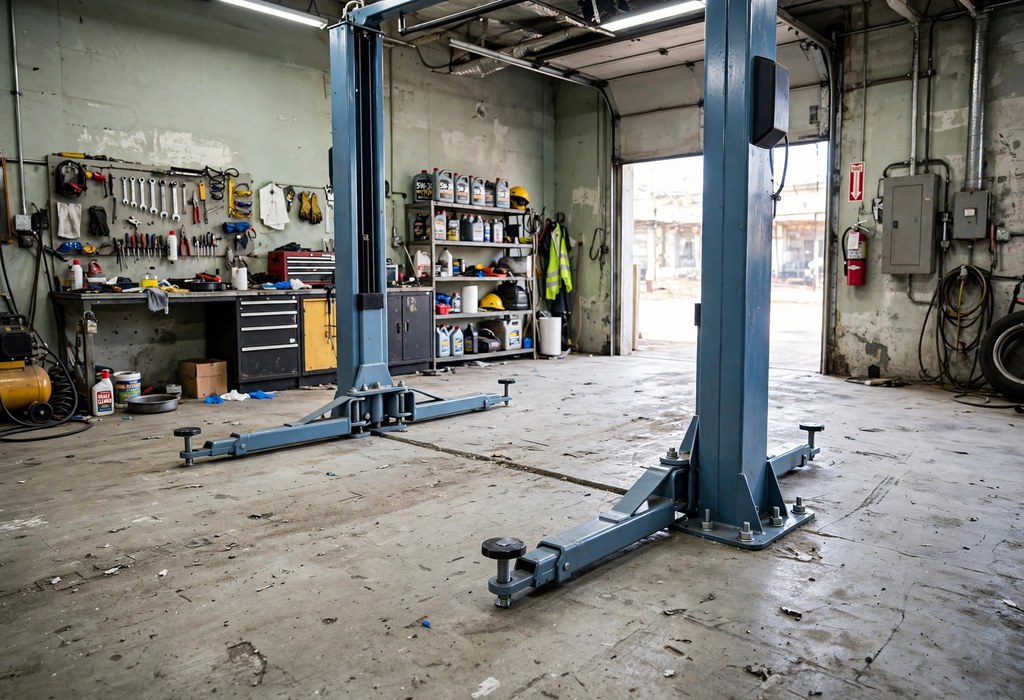
First, lift design sets your starting price before any accessories enter the picture. Our car lift for garage explains how each design fits different garages and jobs. Additionally, heavier vehicles and taller lifting heights usually require stronger, pricier equipment.
Capacity influences price because stronger steel, cables, and hydraulic systems cost manufacturers more. Moreover, buyers who choose extra capacity gain flexibility for future trucks and SUVs. In contrast, oversized capacity wastes money when your vehicles stay light and compact.
Certification and Safety Standards
ALI-certified lifts cost more and carry the recognized safety standard for lift design. Specifically, independent testing verifies safety locks, load ratings, and structural strength before certification. Therefore, certification adds equipment cost but also adds confidence for daily work underneath.
Shipping Weight and Build Quality
Meanwhile, shipping weight rises with thicker steel, longer runways, and larger power units. Heavier lifts need stronger freight handling, and carriers charge more for that weight. Furthermore, premium finishes, dual cylinders, and longer warranties also push equipment prices upward.
Garage Car Lift Cost Bands by Lift Category
Generally, simple lifts cost less because they raise vehicles only a short distance. However, full-rise lifts support deeper repairs, comfortable standing work, and long-term vehicle storage. Use the following typical bands to compare categories before requesting detailed quotes.
- Low-rise and portable lifts: Typical prices run roughly $1,000 to $3,000 for basic access.
- Mid-rise scissor lifts: Typical prices run roughly $1,500 to $3,500 for wheel work.
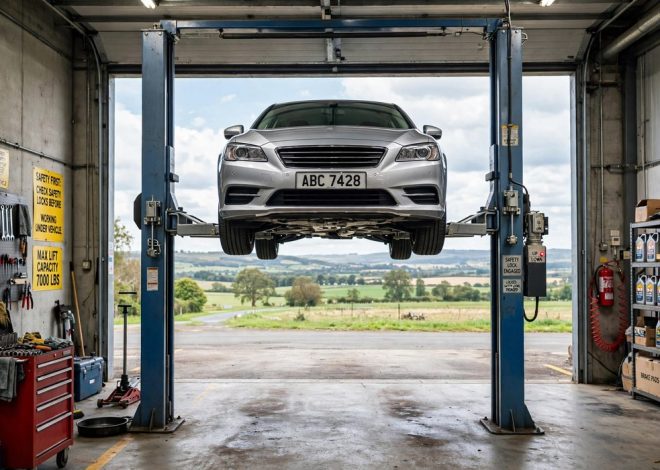
- Two-post lifts: Typical residential prices run roughly $2,000 to $5,000 for repairs.
- Four-post lifts: Typical residential prices run roughly $2,000 to $5,000 for storage.
- Premium high-capacity lifts: Typical prices climb above those bands for heavier vehicles and features.
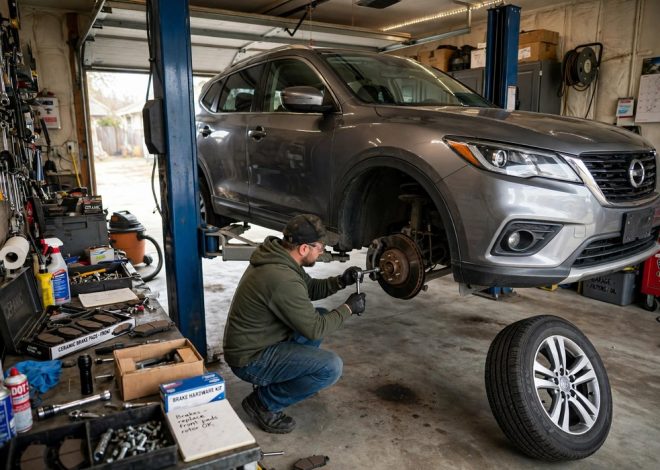
For example, a four-post lift suits storage because vehicles drive directly onto runways. Meanwhile, a two-post lift suits repairs because wheels hang free for brake work. Consequently, category alone never tells the full story of your total investment.
Garage Car Lift Cost: Installation and Site Preparation
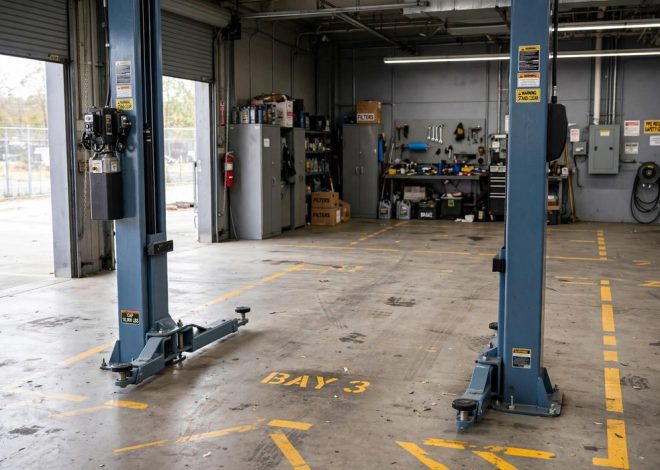
Installation costs vary because garages differ in access, slab condition, and ceiling height. Following the car lift installation steps helps you understand anchoring, assembly, and final testing. Additionally, tight doorways and low ceilings can slow crews and increase labor time.
Professional Installation
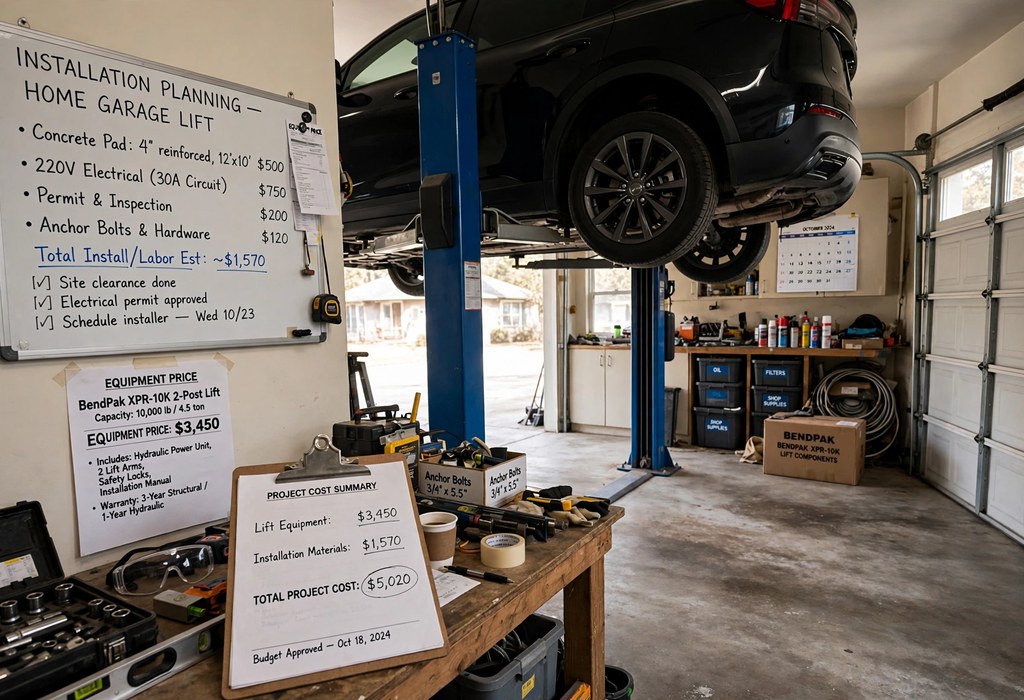
Professional installation commonly adds roughly $500 to $1,500 for residential two-post and four-post lifts. Installers level columns, torque anchor bolts, route hydraulic lines, and test safety locks. Moreover, experienced installers spot clearance problems before heavy equipment reaches your garage floor.
Electrical and Concrete Work
Most full-size lifts run on 220V power and need a dedicated circuit. Typically, licensed electricians charge a few hundred dollars for 220V circuit work. Two-post anchors need concrete at least 4 inches thick and rated 3,000 PSI.
However, thin or cracked concrete forces installers to cut and pour stronger pads first. That extra concrete work adds material, labor, and curing time to your project. Therefore, test your slab early and avoid expensive surprises during installation week.
Delivery, Accessories and Ongoing Costs
Delivery surprises many buyers because residential lifts arrive by freight truck, not parcel. Freight shipping commonly costs a few hundred dollars, depending on distance and weight. Furthermore, liftgate service, residential delivery, and terminal pickup can change your final freight bill.
- Drip trays: Plastic trays protect lower vehicles and floors from fluid leaks above.
- Jack trays: Steel trays hold jacks that raise wheels off four-post runways safely.
- Caster kits: Rolling casters let owners move unloaded four-post lifts around the garage.
- Approach ramps: Longer ramps help low vehicles climb runways without scraping front bumpers.
Accessories matter most when your lift serves both storage and regular repair work. Comparing a two-post versus four-post car lift clarifies which accessories your setup actually needs. Consequently, price accessories with the lift instead of adding them one by one later.
Hidden and Ongoing Costs
Owners also pay for hydraulic fluid, anchor hardware, and occasional replacement cables over time. Additionally, routine inspections keep safety locks, arms, and equalizer cables working as designed. Some owners also budget for permit checks, garage door adjustments, and ceiling clearance changes.
Warranty coverage reduces risk, but owners still handle normal wear and scheduled maintenance. Moreover, storing vehicles long term may require battery care and tire protection supplies. Overall, modest yearly upkeep protects a much larger equipment investment for years.
How to Build a Realistic Garage Car Lift Cost Budget
First, list equipment, installation, electrical work, concrete work, freight, and accessories separately. Next, request written quotes that state capacity, certification, power requirements, and delivery terms clearly. Finally, keep a small contingency because older garages often reveal hidden preparation needs.
For example, a basic portable setup may need almost no site preparation work. In contrast, an anchored two-post setup may need electrical and concrete upgrades first. Therefore, compare complete project totals rather than equipment prices alone when deciding.
Frequently Asked Questions
How much does a home garage car lift cost in total?
Most complete residential projects combine equipment, installation, freight, and preparation into one higher total.
How much does it cost to install a car lift?
Professional installation commonly adds roughly $500 to $1,500, depending on lift type and garage.
Do home car lifts need 220V power in most garages?
Most full-size lifts run on 220V power, although smaller portable models may differ.
What concrete thickness does a two-post lift require for anchors?
Two-post anchors need concrete at least 4 inches thick and rated 3,000 PSI.
Are ALI-certified home garage lifts worth the extra cost?
Certified lifts cost more, but independent testing verifies their safety locks and load ratings.
Conclusion
Overall, home garage car lift cost reflects equipment quality, installation complexity, and garage readiness. Buyers who compare typical bands and site costs choose lifts with fewer surprises. Therefore, measure your garage today, verify your concrete, and request complete written quotes now.