Garage Ceiling Height for a Car Lift: Clearance Requirements by Lift Type
Most garages need about 11 to 12 feet of ceiling for full-rise lifts. However, the exact garage ceiling height for a car lift depends on your vehicle. Therefore, you should always add vehicle height, lift height, and safety clearance together.
Additionally, overhead beams, door tracks, lights, and openers often reduce your usable overhead clearance significantly. For example, a tall vehicle on a tall lift quickly exceeds standard ceilings. Moreover, careful measuring before buying prevents costly clearance mistakes and unsafe installations in your garage. Finally, this guide explains requirements by lift type and practical low-ceiling workarounds.
The Garage Ceiling Height Formula for Every Lift
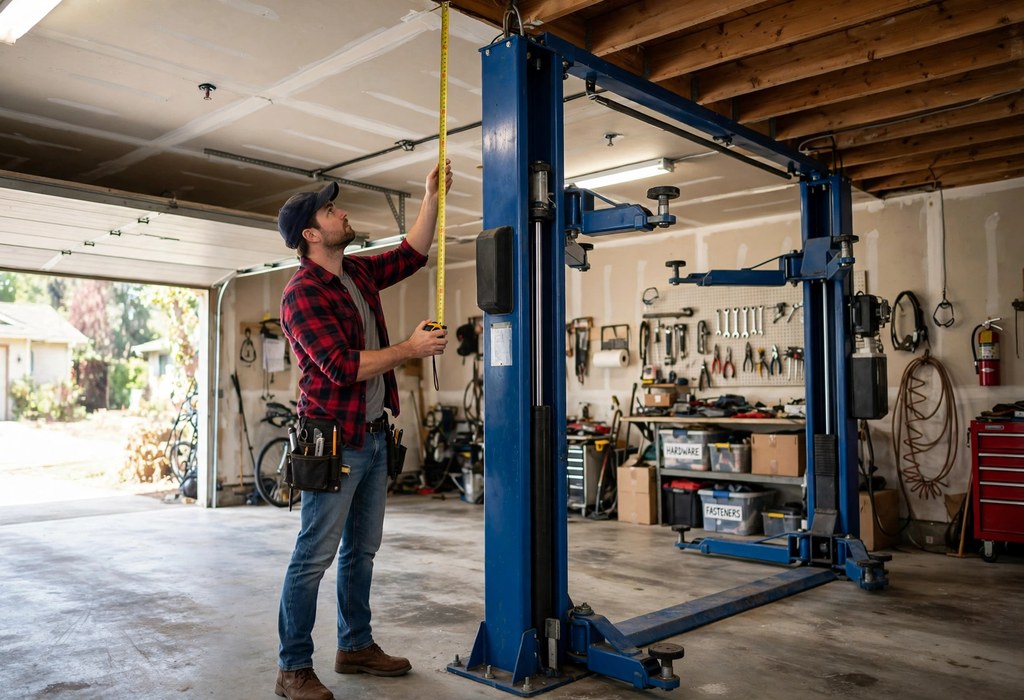
First, add your vehicle height to the maximum lift height. Next, add a few extra inches for essential safety clearance above. Together, those three numbers equal your minimum required ceiling height exactly.
For example, a sedan needs far less height than an SUV. Additionally, our car lift for garage explains types, space, and safety basics clearly. Still, you should always verify the final number against manufacturer specifications carefully. Specifically, a typical sedan measures about 57 inches tall at the roof.
- Vehicle height: Measure the tallest vehicle from ground to highest roof point.
- Maximum lift height: Check the distance the lift raises the vehicle lifting points.
- Safety clearance: Add several inches so the roof never contacts the ceiling.
Additionally, working height matters because you need comfortable headroom beneath vehicles daily. For example, standing room disappears quickly when tall vehicles rise fully overhead. Therefore, plan for your height, the vehicle height, and comfortable movement together.
How to Measure Garage Ceiling Height Properly
First, measure from the finished floor to the lowest ceiling surface. However, you must measure at the lowest obstruction, not the highest point. Therefore, check beams, trusses, lights, ductwork, and stored items overhead carefully.
Measuring Steps That Prevent Mistakes
Next, measure the vehicle at its tallest point, including roof accessories. Additionally, measure the open door and opener position inside the lift bay. Finally, record every measurement twice and compare both sets before ordering.
Meanwhile, sloped ceilings and uneven floors change clearance across the whole bay. However, the lowest measured point always controls your safe maximum lift height. Still, level floors and square measurements keep installation safer and far simpler overall.
- Ceiling joists and trusses: They often hang lower than the flat ceiling surface.
- Light fixtures and ductwork: They reduce clearance directly above the raised vehicle roof.
- Overhead storage racks: They block lift travel and create serious strike hazards above.
Garage Ceiling Height Needs by Lift Type
Overall, lift design changes both column height and usable working height greatly. Moreover, many two-post lifts stand roughly 9 to 12 feet tall. In contrast, compact lifts trade standing room for lower ceiling demands overall.
Overhead Two-Post Lifts
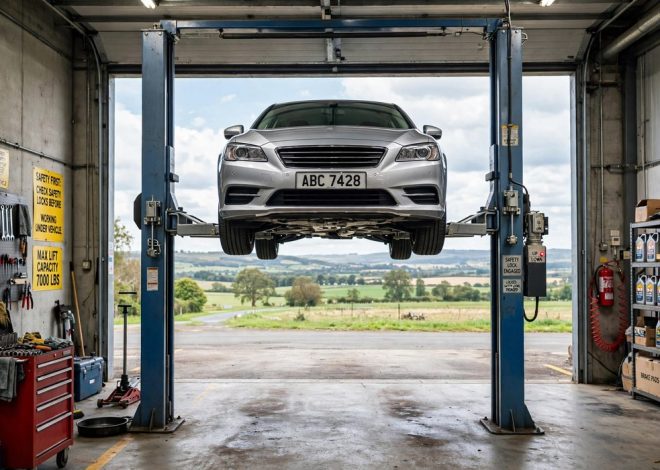
Overhead models connect both columns with a crossbeam across the top. Therefore, the crossbeam height alone often demands about 12 feet overhead. Additionally, full lift height commonly needs about 11 to 12 feet.
Baseplate Two-Post Lifts
Baseplate models replace the overhead crossbeam with a low floor plate. As a result, the raised vehicle roof sets the ceiling limit instead. However, the floor plate still creates a small bump across the bay.
Four-Post Lifts
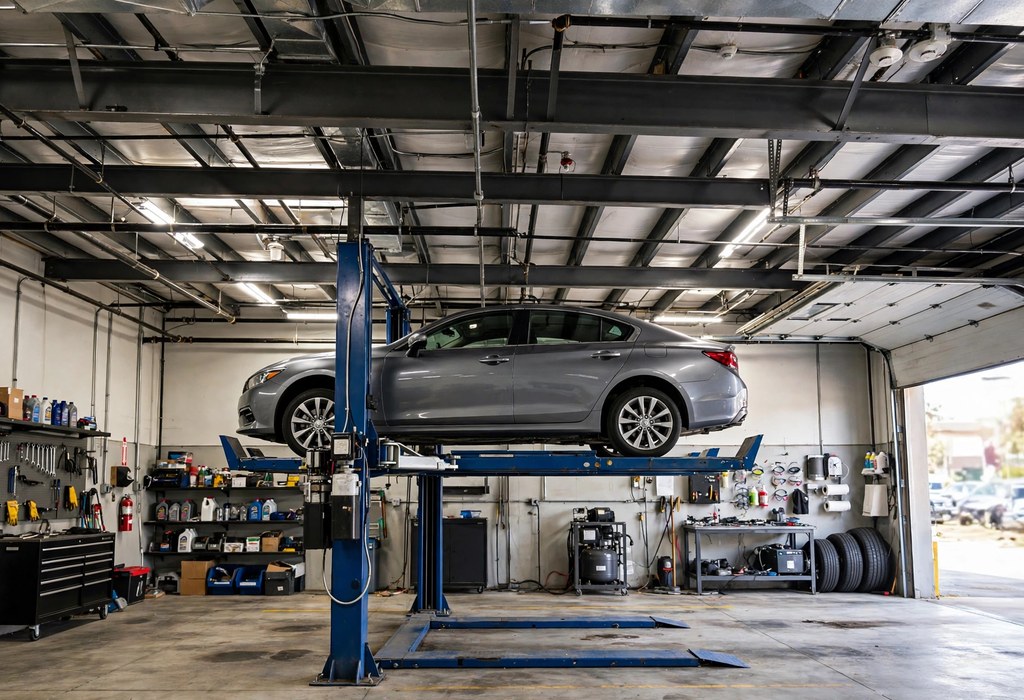
Four-post lifts use drive-on runways and four supporting columns for stability. Meanwhile, a car storage lift for garage stacks two vehicles within one space. For storage, add both vehicle heights, runway thickness, and safety clearance together. Similarly, many SUVs reach about 70 inches and need considerably more room.
Mid-Rise Scissor Lifts
Mid-rise scissor lifts lift vehicles about 48 inches above the floor. Therefore, they suit tire, brake, and detailing work under lower ceilings. Still, the center mechanism limits access beneath the middle of vehicles.
Low-Rise and Portable Lifts
Low-rise lifts raise vehicles only about 26 to 30 inches total. For example, the best car lift for a small garage suits tight bays well. Additionally, portable models store away and free floor space between uses easily.
Garage Door and Opener Conflicts
Often, the open sectional door blocks more ceiling than the lift itself. However, standard door tracks curve overhead directly through the lift zone. Similarly, a center opener rail hangs low above the raised vehicle roof.
Workarounds for Low Ceilings
First, high-lift tracks carry the door higher along the wall before turning. Next, a wall-mounted jackshaft opener removes the ceiling rail and motor completely. Finally, a roll-up door or repositioned lights can reclaim valuable overhead space.
- Raise the lift position: Shift the lift forward or sideways away from tracks.
- Limit the lift height: Stop below full rise when the ceiling restricts travel.
- Choose certified equipment: Select ALI certified lifts and follow the safety standard always.
Importantly, ALI certification confirms the lift meets the recognized safety standard. Therefore, always choose certified models and follow every manufacturer instruction exactly.
Additionally, test the raised vehicle against the open door before final installation. Moreover, slow test lifts reveal track, opener, and light conflicts early safely. Finally, adjust the layout before anchoring anything permanently into the concrete slab.
Frequently Asked Questions
How much clearance is needed for a car lift?
Most full-rise lifts need vehicle height plus maximum lift height plus several inches of safety clearance.
Can you put a car lift in a 10-foot garage?
Yes, baseplate, mid-rise, low-rise, and portable lifts often fit comfortably beneath lower 10-foot garage ceilings.
What ceiling height does a two-post lift need?
Typically, overhead two-post lifts need about 12 feet, while baseplate models need noticeably less clearance.
What ceiling height does a four-post storage lift need?
Overall, storage use needs both vehicle heights plus runway thickness plus several inches of safety clearance.
What happens if my garage ceiling is too low?
Instead, choose a lower lift type or modify the door tracks and opener setup first.
Conclusion
Overall, the right ceiling height always starts with honest, careful measuring first. Therefore, run the formula for your tallest vehicle before comparing any models. Finally, measure your garage today and shortlist only lifts that fit safely.