How to Load a Budget Moving Truck Safely
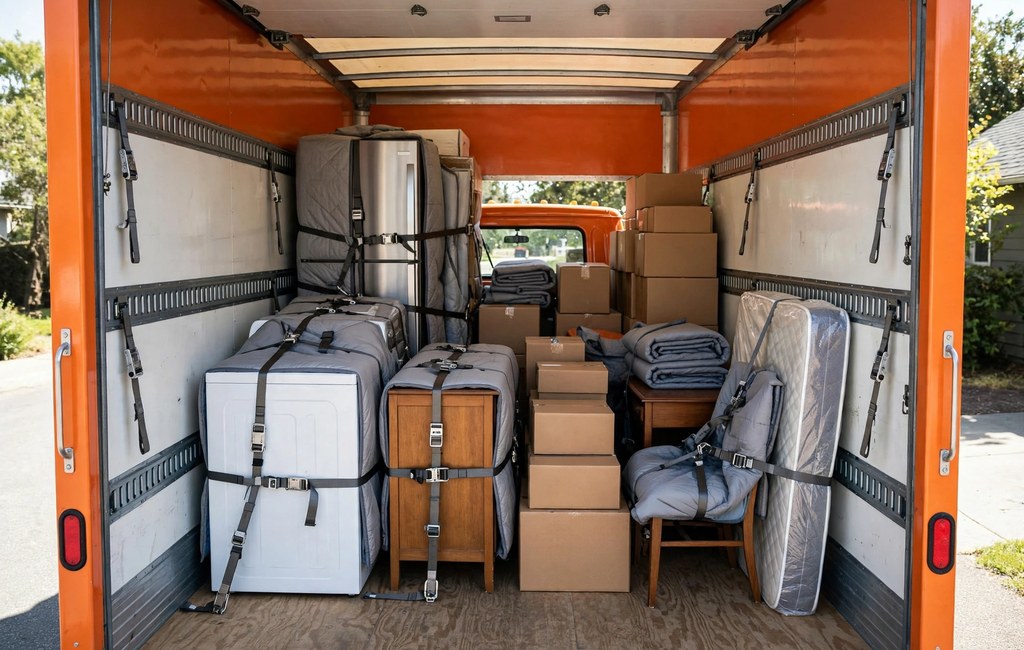
First, load heavy furniture and appliances low against the front wall of your budget moving truck. Then build tight layers toward the door and strap each layer firmly. This order keeps weight forward, low, and balanced across the floor.
Therefore, planning your budget truck rental around that sequence protects furniture during every stop and turn. Also, an empty cargo box works like a blank grid on paper. For example, each square of floor space gets one clear loading job.
Next, you fill each row completely before you start another row behind it. Finally, you check every strap again before you close the rear door. That simple check prevents loose cargo from shifting during the drive.
Prepare Furniture Before Loading the Budget Moving Truck
First, stage every packed box and wrapped piece near the loading door. Next, remove loose shelves, drawers, and detachable legs from large furniture. Then place screws and bolts inside labeled bags and tape each bag securely.
Also, empty dressers and cabinets before you wrap or carry them outside. In addition, appliances need dry, clean interiors and secured doors before loading.
- Moving blankets: Wrap wood, leather, and polished surfaces before loading each piece.
- Dolly support: Roll heavy appliances and stacked boxes instead of dragging them.
- Clear path: Keep the ramp and doorway free from cords and clutter.
Also, group hardware, cushions, and removable parts together beside each matching piece. This grouping speeds reassembly and prevents small parts from disappearing during unloading. A budget moving truck rewards careful loading with calmer driving.
Build the Heavy Base Inside the Budget Moving Truck
First, stand refrigerators, washers, and dressers upright against the front wall. Next, push each heavy piece flush against its neighbor without forcing joints. Also, place mattresses upright along side walls and protect each face well.
Then fill gaps beside appliances with sturdy, heavy boxes at floor level. However, never stack heavy boxes above shoulder height inside the truck. This low base lowers the center of gravity during turns. For example, a level base supports every lighter layer above it safely. Every budget moving truck handles better with a balanced load.
Balance Weight Evenly From Side to Side
First, pair heavy pieces across the floor instead of grouping them together. For example, balance a refrigerator on one side with a dresser opposite. Also, keep the heaviest share forward rather than near the rear door.
Then check the load after every few rows and correct any lean. Similarly, spread dense boxes of books across several low stacks evenly. Uneven weight makes steering, braking, and cornering feel less predictable immediately.
Meanwhile, watch the truck body as weight grows on each side. Then correct a visible lean immediately before you add more weight. Straps keep furniture steady inside the budget moving truck.
Fill the Middle With Tight Walls of Boxes
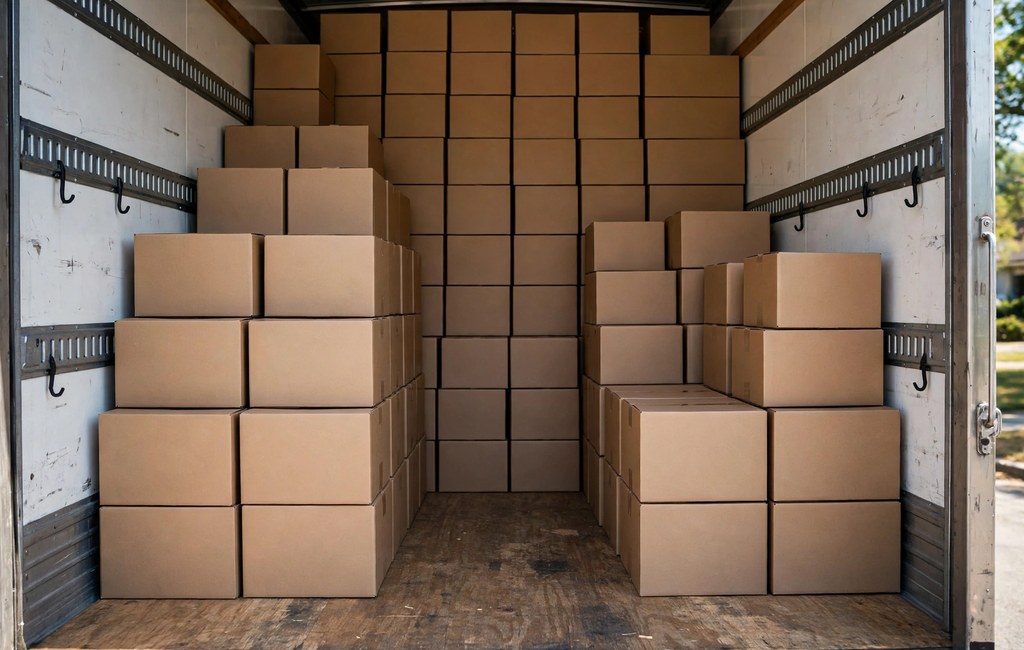
Next, stack similar sized boxes into flat, interlocking rows behind furniture. Place the heaviest boxes at the bottom of every stack you build. Then work upward with lighter boxes and keep every top surface level. Also, turn box labels outward so you can identify contents quickly later.
Also, fill hollow spaces under tables with soft bags and cushions. In addition, close every small gap before it becomes a shifting channel. Tight walls move as one block instead of scattering during braking. Renters load a budget moving truck once, then check every strap.
Secure Every Layer With Blankets and Straps
Use Blankets as Protection and Padding
First, drape blankets over corners, edges, and finished surfaces between pieces. Then fold extra padding into narrow gaps between furniture and boxes. Also, layer blankets between flat items like mirrors and tabletops carefully.
Strap Each Section Before Building the Next
Next, attach straps to the truck anchor points along both walls. Then pull each strap snug across the completed section without crushing boxes. Finally, tug every secured piece by hand and tighten any loose strap. Also, recheck straps after the next section adds pressure behind them. A packed budget moving truck still needs clear mirror views.
Set Fragile Belongings High and Last
First, pack dishes, glassware, and lamps inside cushioned, clearly labeled boxes. Next, place those boxes on top of stable stacks, never underneath furniture. Also, wedge soft items around fragile boxes and remove any remaining movement. In addition, mark every fragile box on several sides with clear labels.
Meanwhile, keep medicines, documents, and valuables with you outside the cargo box. Then load fragile pieces last so you unload them first on arrival. This placement protects delicate items from pressure, sliding, and sudden drops.
Respect the Budget Moving Truck Payload Limit
First, check the payload limit for your specific truck before loading. Next, confirm that limit at booking or on the truck documentation directly. Also, remember that boxes, furniture, passengers, and fuel all add weight. Then ask the rental counter staff when any limit remains unclear.
However, a full looking truck can still sit below its payload limit. In contrast, dense loads of books and tools can exceed limits quickly. Therefore, choose a larger truck instead of forcing an overloaded final layer.
Run a Final Check Before You Drive Away
First, walk the full length of the cargo box with fresh eyes. Then push and pull each large piece and listen for shifting sounds. Also, check the space above stacks for loose items hiding there.
- Strap tension: Tighten every strap and replace any strap that slips.
- Door clearance: Confirm nothing leans against the rear door before closing it.
- Top layer: Check fragile boxes sit level and cannot slide sideways.
- Essentials access: Place first needed items near the door for quick unloading.
Finally, close and latch the door, then test the load again outside. Also, drive slowly at first and stop safely after any loud shift. That early stop lets you fix movement before it damages belongings.
Frequently Asked Questions
Should heavy items go at the front or back of a truck?
First, place heavy items against the front wall, low on the floor.
How do you stop furniture from shifting in a moving truck?
Then strap each completed section tightly and fill every remaining gap completely.
Where should fragile boxes go in a moving truck?
Also, place fragile boxes on top of stable stacks, away from heavy furniture.
What happens if you overload a rental moving truck?
Therefore, overloading strains brakes and suspension and makes steering feel less predictable.
How many moving blankets do you need for a truck load?
Rent enough blankets to cover every furniture surface and pad each gap.
Conclusion
First, sketch your layers, load the heavy base, and strap every section. Then reserve your truck early and confirm its payload limit before loading day. Finally, start loading today with that sequence and protect every belonging inside.