How to Drive a Budget Moving Truck Safely
You drive a moving truck safely by slowing down, widening turns, and leaving extra space. First, sit in the cab and learn its size before moving. Then, those first five calm minutes prevent most first-drive mistakes. Also, patience matters more than confidence on an unfamiliar drive.
The seat feels higher and the box stretches far behind you. However, simple steady habits quickly make the larger vehicle feel surprisingly manageable. This guide follows one full drive, from quiet streets to final parking. Moreover, each phase below builds control in a logical order.
Your First Five Minutes in the Cab
First, your budget truck rental feels easier once the seat fits properly. Adjust the seat until both pedals feel easy to reach. Also, fasten your belt before you adjust anything else.
Next, angle both side mirrors along the full cargo box. Most rental trucks provide no center rearview mirror for traffic. Therefore, your side mirrors become your main view behind you.
Blind spots hide vehicles along both sides and directly behind. Also, a car can disappear briefly beside the long box. Finally, test lights, wipers, and horn before leaving the lot.
Also, find headlight, wiper, and hazard controls before starting. Then, note the fuel type shown near the fuel door. Practice one gentle stop in the rental lot, if permitted.
Meanwhile, note the truck height and width before rolling forward. Posted clearance figures differ clearly between smaller and larger models. You steer a moving truck safely with both hands and full attention.
- Published clearance: Budget lists 11 feet for its 16-foot truck.
- Largest clearance: Budget lists 13 feet for its 26-foot truck.
- Cab decal: Check the posted height inside your specific truck.
- Overall width: Expect a wider body than your usual car.
Phase One: Driving a Moving Truck Safely on Neighborhood Streets
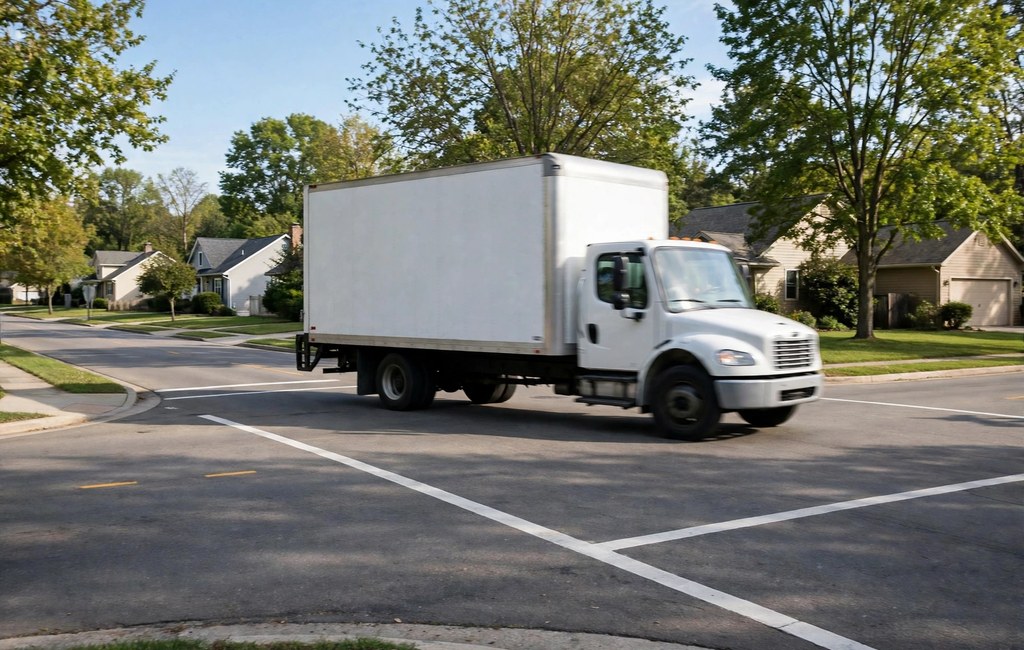
Start slowly and practice gentle stops on a quiet street. Next, scan far ahead for parked cars and playing children. Also, keep both hands ready for sudden neighborhood surprises.
For right turns, swing wider than your car requires. Then, watch the inside mirror as rear wheels track inward. However, avoid swinging into an occupied lane beside you.
Narrow streets demand slower speeds and generous side clearance. Also, yield extra space around cyclists, bins, and mailboxes. If space feels tight, pause and let others pass first.
Approach each intersection slowly and expect drivers to misjudge your size. Also, watch mirrors for pedestrians stepping near rear wheels. Finally, stop earlier than usual behind crosswalks and intersections. Drivers park a moving truck safely by choosing long, open spaces.
Phase Two: The Highway Stretch and Heavy Braking
On highways, settle into the right lane and hold steady speed. Also, keep at least four seconds behind the vehicle ahead. Then, double that gap during rain or heavy traffic.
A loaded truck needs much longer to stop safely. Therefore, lift off early and press the brake smoothly. Hard braking can shift cargo and unsettle the truck.
Signal early before merging or changing lanes on highways. Next, check both mirrors twice and move over gradually. Meanwhile, avoid passing unless you have abundant clear space.
Plan exits early because lane changes take extra time. Also, use navigation prompts early on unfamiliar highway routes. If you miss an exit, continue calmly to the next. You brake a moving truck safely by starting earlier than usual.
Clearance Checks, Bridges, and Poor Weather
Read every clearance sign before approaching bridges and parking structures. Also, compare each sign against your posted cab height. If clearance looks uncertain, stop and choose another route.
Low branches, awnings, and drive-through canopies create similar risks. Therefore, avoid drive-through lanes and tight parking garage entrances. For example, fuel stations need careful checks for low canopies.
Rain stretches braking distances and reduces your overall grip. Also, slow down early and increase your following gap. Strong crosswinds can push the tall box sideways unexpectedly. Then, grip the wheel firmly and avoid sudden corrections.
Snow, ice, or standing water demands even gentler inputs. Therefore, postpone driving when visibility drops near zero. Also, never use cruise control on slick road surfaces. Checking mirrors often keeps a moving truck safely inside its lane.
Phase Three: Parking a Moving Truck Safely
Choose pull-through spaces whenever possible at your destination. Also, leave extra room behind for ramps or doors. Finally, set the parking brake every time you stop.
Reversing gives you the poorest view of surrounding people. Therefore, ask a spotter to stand within mirror view. Next, open your window and agree on clear signals.
If alone, walk behind the truck before reversing anywhere. Then, reverse slowly and stop whenever your view disappears. Also, never rush the final few feet into place.
Before opening doors, check mirrors for passing traffic and cyclists. Also, straighten the truck fully before your final stop. Then, remove the key and lock the cargo area securely. Slowing down early helps you stop a moving truck safely.
Frequently Asked Questions
Is driving a moving truck harder than driving a car?
However, slower speeds and wider turns make it very manageable.
How much following distance does a loaded truck need?
Keep at least four seconds, and double it in rain.
Can I drive a moving truck through a drive-through?
No, because most drive-through canopies sit below truck height.
How do I back up a moving truck safely?
Use a visible spotter, open windows, and reverse very slowly.
What should I do in strong wind or rain?
Slow down, increase following distance, and grip the wheel firmly.
Conclusion: Arrive Calm, Parked, and in Control
Your first drive becomes easier when every phase stays unhurried. Also, mirrors, space, and gentle braking protect people and cargo.
Book your truck early and allow generous time on moving day. Then, walk around the truck and set your mirrors before departure. Finally, drive slowly, check clearance, and enjoy a safer move.