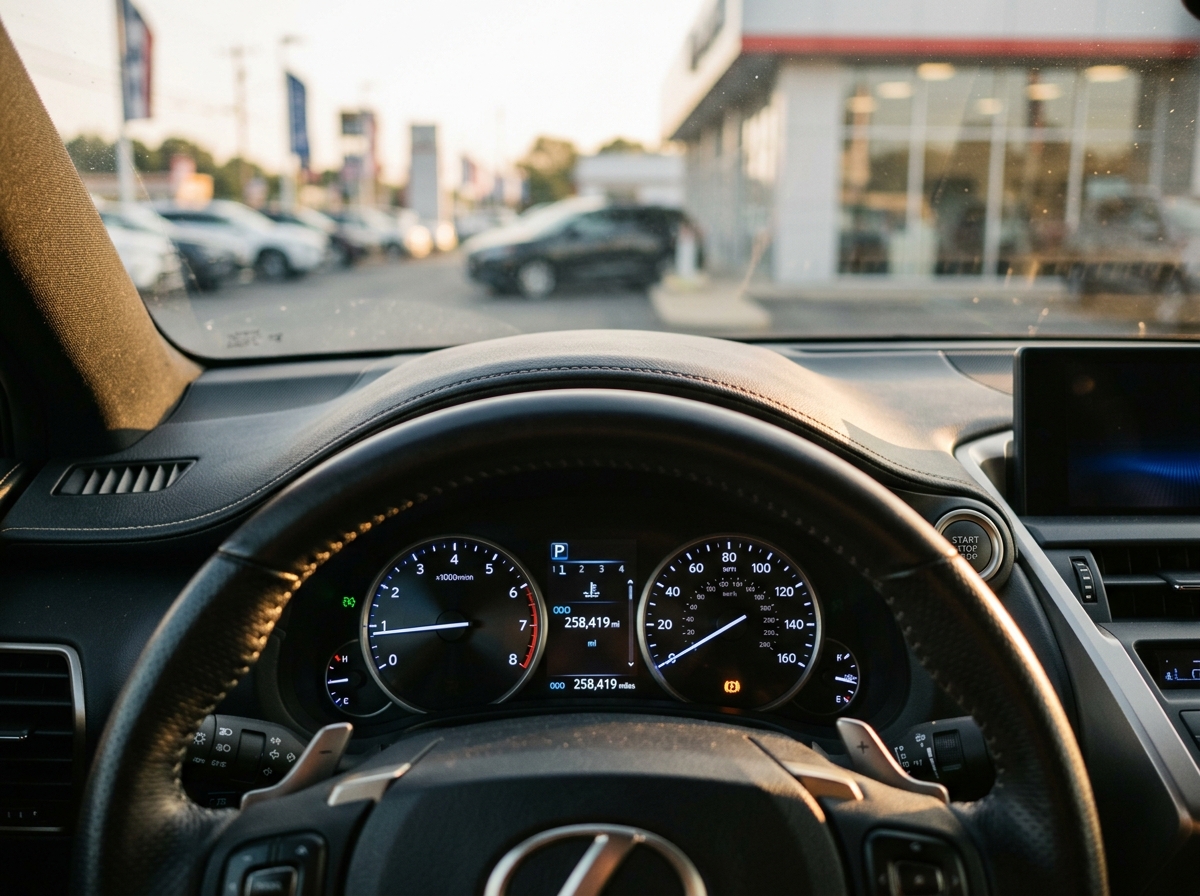
How Many Miles on a Used Car Is Too Much? (2026 Data-Backed Guide)
There is no single number that makes a used car “too much.” But there are useful ranges, and the right answer depends on four things: the model, the powertrain (gas, hybrid, or EV), how the car was maintained, and what you pay for it. Backed by industry insights from //www.autonags.com/, this guide gives you the 2026 data, a simple break-even method, and a checklist so you can decide for yourself instead of guessing.
The Short Answer
- For most gas cars, 100,000 miles is no longer the finish line. A well-maintained car from a durable brand can run far beyond it, while a neglected car can be a bad deal at half that mileage.
- Use this rule of thumb: a car is “normal” if its odometer is close to its age multiplied by about 12,000 miles. Far above that means heavy use (often highway miles, which are gentler). Far below deserves a closer look too.
- Condition and records beat the odometer. A 120,000-mile car with documented service is usually a safer bet than a 60,000-mile car with no history.
- For EVs, battery health and remaining battery warranty matter more than the odometer.
- Price decides whether high miles are worth it. The discount for extra miles must be bigger than the repairs you are likely to face.
Mileage vs. Age vs. How the Car Was Used
Most guides use roughly 12,000 miles per year as the average (some say 10,000 to 15,000). To check any car, divide the odometer reading by its age in years.
| Car age | Typical odometer (at ~12,000 mi/yr) |
| 3 years | about 36,000 miles |
| 5 years | about 60,000 miles |
| 8 years | about 96,000 miles |
| 10 years | about 120,000 miles |
Then adjust for how those miles were driven:
- Highway miles are easier on a car than stop-and-go city miles. Constant speed means less brake, transmission, and engine stress. A three-year-old car with 80,000 mostly highway miles can be in better shape than a ten-year-old car with 60,000 miles of short city trips.
- Short trips are hard on engines because they rarely let the engine fully warm up.
- Climate and roads matter. Salted winter roads, extreme heat, and rough streets all add wear that the odometer does not show.
- A young car with very high mileage may have been a rental, a rideshare vehicle, or a fleet car. That is not automatically bad, but it makes the service history more important.
Which Cars Actually Last? What the 2026 Longevity Data Says
Generic advice says “it depends on the model.” Here is what that looks like in numbers. In 2026, the car-data company iSeeCars analyzed more than 395 million vehicles to estimate each brand’s chance of reaching 250,000 miles. The overall average came out at 5.4%.
| Brand | Estimated chance of reaching 250,000 miles |
| Toyota | 19.7% |
| Lexus | 14.4% |
| Honda | 13.3% |
| Acura | 9.5% |
| GMC | 5.8% |
| All-brand average | 5.4% |
| Lincoln | 4.7% |
| Ford | 4.1% |
At the model level, the gap is even bigger. The Toyota Sequoia led at 42.3%, and the Lexus LS followed at 38.8%. Toyota and Lexus models took the first nine places on the list of long-lasting models.
How to read this: reaching 250,000 miles is a very high bar, so even good brands have modest odds. The useful takeaway is relative. A car from a brand with a strong longevity record gives you more room before mileage becomes a worry. A brand below the average gives you less. Remember that these are statistical estimates from odometer data, and that owner behavior matters: people tend to maintain reliable cars better, which helps those cars last longer.
Gas vs. Hybrid vs. EV: What “Too Many Miles” Means for Each
Gas cars
The worries are engine and transmission wear, plus big scheduled items. One widely used mileage guide places typical wear points like this:
- 30,000 to 70,000 miles: brake pads (rotors may follow later)
- 60,000 to 100,000 miles: timing belt or chain service on many engines
- 100,000 to 150,000 miles: transmissions can begin to need repair or replacement
These are typical ranges, not guarantees. Check your specific model’s maintenance schedule.
Hybrids
The engine is often durable, but the high-voltage battery is the item to research. Battery warranty terms can differ by state and model year, so confirm exactly what is left on the car you are looking at. A hybrid near the end of its battery warranty is a bigger risk unless the battery has been replaced or tested.
Electric vehicles
With an EV, the odometer is a weaker signal than battery state of health (SoH). A large UK battery study found that EVs with more than 100,000 miles frequently tested at 88% to 95% state of health. Many manufacturers’ battery warranties run eight years or 100,000 miles and cover a drop to roughly 70% capacity, a level that real-world cars rarely approach in that window.
For a used EV, ask these questions instead of “how many miles?”:
- What is the verified battery state of health?
- How many years and miles of battery warranty remain?
- What is the real-world range today compared with when new?
- How often was it fast-charged, and has it lived in a very hot climate?
- Is the price meaningfully lower than a similar lower-mileage EV?
What Mileage Does to the Price
A common belief is that a car’s value falls off a cliff at 50,000 or 100,000 miles. The 2026 market data does not strongly support that.
- An analysis of about 1.77 million used listings (October 2026) found no consistent price cliff around 50,000, 75,000, or 100,000 miles. Median asking prices generally dropped by roughly $300 to $1,400 for each additional 10,000 miles, depending on the range.
- Another 2026 listing analysis estimated about $1,834 per 10,000 miles, on top of age-related depreciation.
The two figures differ because the methods differ (different listings, price types, and mixes of vehicles). Treat them as a range, not a promise. What matters is the pattern: the price falls steadily with miles, and there is no magic threshold where a car suddenly becomes cheap.
The market reality: Edmunds reported that used cars priced between $10,000 and $15,000 in Q2 2026 averaged nearly nine years old with about 98,000 miles. That is roughly four years older and 40,000 miles higher than the same price bracket in 2019. The share of used cars sold under $15,000 fell from 31.6% in 2019 to 17.8% in 2026. In plain terms, if your budget is modest, you will probably be shopping at or near 100,000 miles. So the real question becomes how to buy a high-mileage car safely.
The Break-Even Test: Is the Discount Worth the Miles?
Use this simple worksheet to compare a lower-mileage car with a higher-mileage one of the same model and year.
- Price gap: Lower-mileage price minus higher-mileage price.
- Repair reserve: Subtract what you expect to spend in the first year on overdue or upcoming service (ask a mechanic for a quote after inspection).
- Years you will keep it: More years means more exposure to big repairs.
- Miles of life left: Compare the odometer to a realistic lifespan for that model, using the longevity data above as a guide.
Illustrative example (made-up numbers for demonstration):
| Car A | Car B | |
| Mileage | 60,000 | 110,000 |
| Asking price | $18,000 | $14,500 |
| Price gap | $3,500 | |
| Estimated first-year service reserve | $500 | $2,000 |
| Net advantage of Car B | $2,000 |
Here Car B still wins on cost, as long as the inspection confirms it is sound and you plan to keep it a reasonable time. If the inspection finds $3,500 of needed work, the advantage disappears, and Car A is the better buy. A pre-purchase inspection is commonly quoted at around $100 to $150, which is a small price for that information.
A caution on repair costs: published estimates for the “100,000-mile service” vary widely, from several hundred dollars to a few thousand, depending on the car. Use a quote for your specific vehicle rather than a generic figure.
Which Buyer Are You? Mileage Guidance by Situation
- Short-commute or low-annual-mileage driver: A higher-mileage car can be a bargain, because you will not use up its remaining life quickly. If you drive well under 10,000 miles a year, an older car with 100,000-plus miles may serve you for a long time.
- Long-distance commuter: Buy for durability and records. Mileage will add up fast, so choose a model with a strong longevity record and keep a repair fund.
- First car or tight budget: Prioritize a clean history report, service records, and an independent inspection over chasing the lowest odometer number.
- Truck or SUV buyer: Work vehicles and towing add stress that the odometer does not capture. Ask about towing and hauling history, and look at the transmission and cooling system closely.
- EV or hybrid buyer: Buy on battery health and warranty remaining, not just mileage.
- Luxury car buyer: High mileage can mean expensive repairs. Some luxury brands show very low odds of reaching 250,000 miles in the longevity data, so inspect carefully and budget for repairs.
Is a Car Ever Too Low in Mileage?
Yes, in the sense that unusually low mileage deserves a question. A car that sat for long periods can have dried seals, old tires, degraded fluids, and a weak battery. Low miles on an older car can also mean a lot of short trips, which are hard on engines. Do not skip the service records just because the number looks great.
Your Used-Car Mileage Checklist
Before you buy at any mileage, work through this list.
- Get a vehicle history report to check owners, accidents, title issues, and reported mileage over time.
- Ask for service records. Regular oil changes and major services matter more than the odometer.
- Check what is due soon. Even a low-mileage car may be close to a costly service interval such as a timing belt, transmission fluid, or brakes.
- Compare mileage to age using the 12,000-miles-a-year benchmark, and ask about any big gap.
- Look for signs of fleet or rental use on young, high-mileage cars.
- Test drive on city streets and the highway. Listen for noises, check shifting, and watch for warning lights.
- Get an independent pre-purchase inspection from a mechanic you choose.
- For EVs and hybrids, get a battery health report and confirm the warranty status in writing.
- Negotiate with the findings. Use the inspection and the break-even test to justify your offer.
Frequently Asked Questions
Is 100,000 miles too many for a used car?
Not automatically. Many modern cars run well past 100,000 miles with proper maintenance. Whether it is a good buy depends on the model, the service history, what major work is due, and the price.
Is 150,000 miles too many?
It is a point where the chance of costly repairs rises, so the car should be noticeably cheaper and thoroughly inspected. For a durable model with strong records, it can still be a sensible purchase.
Is 200,000 miles too many?
For most cars, it is high, and only a small share of vehicles reach 250,000 miles at all. It can make sense for a very low price, a proven model, and a careful inspection, but plan for repairs and keep it as a short-term or low-risk vehicle.
Is 50,000 miles too many for a used EV?
No. At that point, most EVs still have plenty of battery warranty left. Judge it by verified battery health and the price.
Which is better: a newer car with high miles or an older car with low miles?
It depends on the car. High miles on a newer car are often highway miles and can be fine with good records. Low miles on an older car can hide age-related wear such as rubber, fluids, and seals. Compare both on maintenance history and inspection results.
How many miles does the average car last?
There is no single answer. Only about 5.4% of vehicles are estimated to reach 250,000 miles, but the odds range from about 20% for Toyota to a few percent for many other brands.
Bottom Line
“Too many miles” is not one number. It is the point where the car’s likely future repair costs, minus what you saved on price, no longer make sense for how long you plan to keep it. Use the 12,000-miles-a-year benchmark to spot oddities, the longevity data to judge the model, battery health for EVs, and the break-even test to check the price. Then confirm everything with a history report, service records, and an independent inspection.
Sources: iSeeCars 2026 Longest-Lasting Cars study; Edmunds Q2 2026 used car report; AutoFinder 2026 depreciation analysis (October 2026); ForCar 2026 depreciation study; Generational UK EV battery study; Capital One, AAA, and J.D. Power used-car mileage guides.