How Much Does It Cost to Install a Home EV Charger?
How Much Does It Cost to Install a Home EV Charger? If you just bought an electric car, that question probably arrived the same week the novelty wore off and the public charging routine began. The answer depends far more on your electrical panel and parking setup than on the charger itself.
Quick answer: Most homeowners pay somewhere between $800 and $2,500 for a complete Level 2 installation, with the charger included. A simple attached-garage job on a panel with spare capacity often lands near $1,000, while detached garages, long cable runs, or a panel upgrade can push costs past $3,000.
This article breaks down each cost component, explains what drives the price up or down, and shows where careful planning saves real money.
What is How Much Does It Cost to Install a Home EV Charger?
The question is really about a bundle of separate costs, not a single sticker price. You are paying for hardware, electrical labor, wiring materials, permits, and sometimes a panel upgrade.
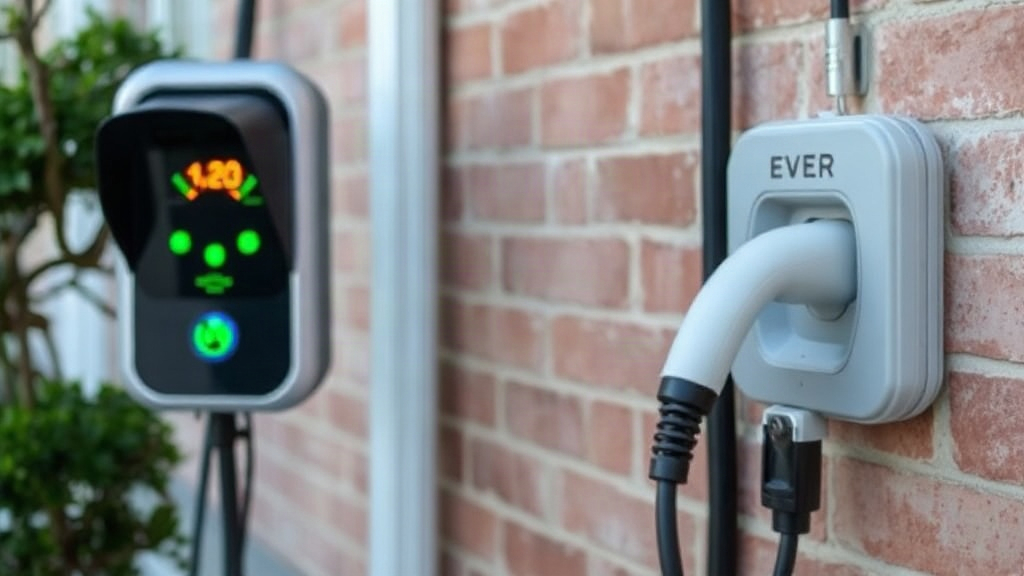
The charger itself (Level 2): Most 240-volt home units sell for $400 to $800. Budget brands sit closer to $400, and smart or higher-powered models reach $700 or more.
Labor and wiring: An electrician typically charges $50 to $100 per hour, and a standard install takes three to six hours. Wire gauge, conduit, and a breaker add $100 to $400 depending on the run length.
Permits: Many jurisdictions require an electrical permit for a new 240-volt circuit. Fees commonly fall between $50 and $300, though some areas charge nothing for residential EV circuits.
Panel upgrade: This is the wild card. If your electrical panel is full or outdated, a service upgrade can add $1,000 to $3,000 on its own.
Location drives much of the variation. A charger mounted directly beside the panel in an attached garage is the cheapest scenario. A detached garage 60 feet away means trenching, conduit, and more wire, which can double labor.
Comparison: Typical installation scenarios
| Scenario | Estimated Total Cost |
|---|---|
| Attached garage, panel nearby | $800 – $1,300 |
| Attached garage, long wire run | $1,300 – $2,000 |
| Detached garage with trenching | $2,000 – $3,500 |
| Any location plus panel upgrade | $2,500 – $4,500 |
Notice that the charger is rarely the biggest line item. Placement and panel capacity decide most of the bill.
Regional labor rates swing the total more than many buyers expect. Electricians in high-cost metro areas may charge well above the national hourly range, while rural areas often come in lower, though travel time to a remote property can offset those savings. Ask local installers for a ballpark before you assume a national average applies to your address.
Time of year and scheduling also nudge the price. Booking during a contractor’s slow season, or bundling the EV circuit with another electrical project such as a panel replacement, can earn a better rate. A single visit that covers two jobs saves the electrician a trip and usually saves you a service call fee.
Takeaway: Get a written quote that separates hardware, labor, permits, and any panel work so you can compare bids fairly.
Why How Much Does It Cost to Install a Home EV Charger? matters
The number matters because it changes the payback math on your entire vehicle decision. Home charging is usually far cheaper per mile than public fast charging, and a botched install can erase those savings.
Electricity at home often costs roughly a third to a half of what public DC fast charging charges per kilowatt-hour, depending on your utility rates. If your install runs $1,200 and you drive 12,000 miles a year, that upfront cost usually fades within a year or two compared with relying on public networks.
Installation quality also affects safety and insurance. An undersized wire or a sloppy breaker connection creates a fire risk, and unpermitted work can complicate a home sale or a claim. A licensed electrician and a proper permit protect you.
Future-proofing deserves attention too. If you plan to buy a second EV or a larger vehicle with a bigger battery, choosing a circuit with spare capacity now costs little extra. Adding it later means paying for labor twice.
Wiring hidden in walls can last decades, but charger models change every few years. Spending a little more on a durable circuit and a mid-range charger often beats buying the most expensive unit.
Renters and condo owners face a different calculation. If you cannot install a permanent circuit, weigh the cost of a portable Level 2 setup or a shared building charger against years of public charging.
Home charging also protects battery health over time. Frequent DC fast charging generates more heat, while slow overnight Level 2 charging is gentler on the pack. For drivers who plan to keep a car for eight years or more, that difference can matter to long-term range and resale value.
Finally, a well-planned install adds a practical selling point. A permitted 240-volt circuit in the garage appeals to the growing share of buyers who already own or plan to buy an EV, and documented professional work reassures them the job was done correctly.
Takeaway: Treat the install as an investment in daily convenience and lower running costs, and insist on permitted, professional work.
Best practices
Good preparation turns a stressful project into a straightforward one. The steps below reflect how experienced installers approach a residential EV job.
Check your panel first. Look for two open breaker slots and confirm your service amperage. A 200-amp panel usually handles an EV circuit comfortably. A 100-amp panel may still work with load management, but an electrician should verify.
Decide on charging speed. A 40-amp circuit delivers roughly 32 amps to the car, adding about 25 miles of range per hour for many models. A 48-amp hardwired setup adds more, but only if your panel and car support it.
Choose hardwired or plug-in. A NEMA 14-50 outlet lets you swap chargers easily. Hardwiring allows higher amperage and is often required for 48-amp units. Pick based on your car’s onboard charger limit.
Get at least three quotes. Ask each electrician to itemize hardware, labor, permit fees, and any panel work. Compare the scope, not just the total.
Confirm permit handling. Ask whether the quote includes pulling the permit and scheduling inspection. Some contractors pass this to you.
Plan the cable route. Shorter runs cost less. Mounting the charger between two parking spots, or near the garage door, can reduce wire length and keep the cable tidy.
Ask the electrician to photograph the inside of your panel before and after the work. Those images document the breaker size, torque settings, and wire routing, which helps if you sell the home or file a warranty claim later. Keep the permit paperwork with the photos in one folder.
Schedule the install for a day you can be home, and clear the garage wall and floor beforehand. Electricians bill by the hour, and moving boxes or shelving mid-job adds time to the invoice. Also confirm whether the quote covers patching drywall or sealing conduit penetrations, since cosmetic repair is sometimes billed separately.
Takeaway: Panel capacity, charging speed, and cable route are the three decisions that most affect both cost and long-term satisfaction.
Common mistakes to avoid
Most costly EV charger problems trace back to a few predictable errors. Avoiding them saves money and frustration.
Skipping the panel assessment. Homeowners sometimes buy a 48-amp charger, then discover their panel cannot support it. That forces a return, a downgrade, or an expensive upgrade.
Hiring the cheapest bid without checking scope. A low quote may exclude the permit, the breaker, or conduit. The final invoice then creeps toward the higher bids.
Ignoring the car’s limits. Every EV has a maximum onboard charging rate. Buying a 48-amp charger for a car capped at 32 amps wastes money on capacity you cannot use.
Using an existing outlet carelessly. A standard 120-volt outlet adds only a few miles of range per hour. An old dryer outlet may not be wired safely for continuous EV load.
Forgetting about load management. Some homes avoid a panel upgrade by installing an energy management device that pauses charging when household demand spikes. Skipping this option can mean paying thousands for an unnecessary service upgrade.
A standard extension cord is not rated for the continuous current an EV draws. Overheating and fire can result. Use only the charger’s own cable and a properly rated circuit.
Overlooking rebates. Many utilities and state programs offer incentives for home charger installation. Checking before you buy can offset a meaningful share of the cost.
Not asking about the warranty. Some electricians guarantee their work for a year or more, while others offer nothing beyond the manufacturer’s coverage on the charger. Get the warranty terms in writing before work begins, and confirm who handles a faulty unit: the electrician, the retailer, or the charger brand.
Choosing a location on impulse. Mounting the charger where the cable barely reaches the port, or where the door can swing into it, leads to awkward daily use. Test the parking position with a tape measure before the electrician arrives.
Takeaway: Slow down before you buy hardware, verify panel capacity and your car’s limit, and read every quote line by line.
FAQ
How much should I budget for a typical home EV charger installation?
Plan for $800 to $2,500 including the charger, labor, and permit. Simple attached-garage jobs sit near the low end, while panel upgrades or long runs push toward the top.
Do I need a panel upgrade to install a home EV charger?
Not always. Many 200-amp panels have room for one more circuit. A 100-amp panel may work with load management instead of a full upgrade, so have an electrician assess it first.
Is a plug-in outlet cheaper than a hardwired charger?
A NEMA 14-50 outlet install is often slightly cheaper and more flexible. Hardwiring supports higher amperage and suits 48-amp units. The price gap is usually a few hundred dollars.
Can I install a home EV charger myself?
Most areas require a licensed electrician and a permit for a new 240-volt circuit. DIY work risks safety, insurance, and resale problems, so professional installation is the safer path.
How long does installation take?
A straightforward install takes about three to six hours. Panel upgrades or long conduit runs can stretch the job across a full day or require a second visit.
Conclusion
The cost to install a home EV charger usually lands between $800 and $2,500, and the final figure hinges on your panel, parking layout, and chosen charging speed. Hardware is a modest part of the bill; labor, permits, and any service upgrade drive most of the variation. Get itemized quotes from several licensed electricians, confirm your car’s charging limit, and check utility rebates before signing. Your next step: photograph your electrical panel and measure the distance to your parking spot, then request three written quotes with those details in hand. That small bit of prep keeps the project on budget and your charging setup safe for years.